Blog Archives

Ramadan Kareem!
Ramadan Kareem from my kitchen to yours
Cape Malay Cooking & Other Delights – keeping our heritage alive
Ramadan – a brief explanation
Ramadan is the 9th month of the Islamic calendar, a religious annual observance and month of fasting that is one of the Five Pillars of Islam. The time spent fasting is meant to be used for prayer, charity, spirituality, and for purifying the mind and body. The beginning and end of the month of Ramadan is determined by the sighting of the new moon. Muslims fast from before sunrise to sunset.

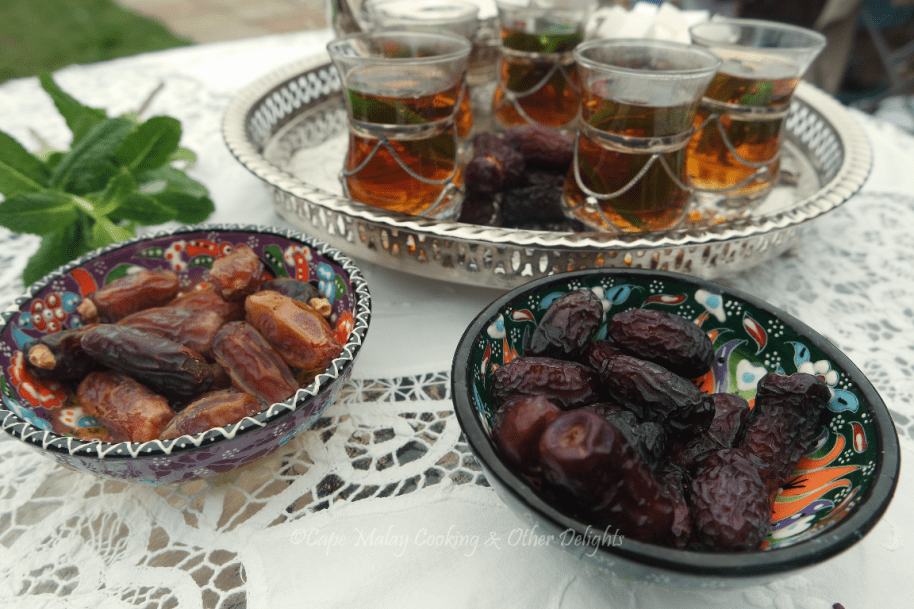
Dates & Mint Tea
Does Ramadan always start on the same day?
No. Because Ramadan is a lunar month, it begins about 10 days earlier each year. During a Muslim’s life, Ramadan will fall during winter months, when the days are short, and summer months, when the days are long.
Why is the month so significant?
Principally because it is the month that Allah revealed the Quran to the last Prophet Muhammad, peace be upon him.
Who is exempt from fasting?
Those who are not required to fast during Ramadan are young children, (those who did not reach puberty) the sick or those with mental illnesses, travellers, the elderly and women who are menstruating, pregnant, breast-feeding or have recently had a baby.
The month of Ramadan contains the most blessed of nights – known as Laylatul Qadr – about which Allah, subhana wa t’ala, says:
‘What will make you realize what the Night of Power is like?
The Night of Power is better than a thousand months.
Angels and the Spirit descend upon it with their Lord´s permission with every command;
There is peace that night until the coming of dawn.
(Quran: 97:1-5)
Traditions
Muslims break their at sunset with dates or water. Traditionally we, the Cape Malays, will have a starter consisting of soup, samosas, dhaltjies, fritters. More often than not after prayers we will have a main meal. During Ramadan plates of food are shared with neighbours. Little children can often be seen carrying plates of food to neighbours, etc… The best charity, the best Zakah, the best Sadaqah is in Ramadan. Feeding the poor and needy fasting people is highly recommended in Ramadan. The Prophet (pbuh) said, ‘Whoever feeds a fasting person, will get a reward like him.’ (Ahmad) He also said, ‘Protect yourself from the fire even by giving half of a date.’ (Agreed upon)

The benefits of Dates
The Prophet (pbuh) used to break his fasts by eating some dates before offering Maghrib prayer. Modern science has proved that dates are part of a healthy diet. They contain sugar, fat and proteins, as well as important vitamins. Dates are also rich in natural fibres. They contain oil, calcium, sulphur, iron, potassium, phosphorous, manganese, copper and magnesium. Dates and palms have been mentioned in the Holy Quran 20 times, thus showing their importance. The prophet likened a good Muslim to the date palm saying, “Among trees, there is a tree like a Muslim. It’s leaves do not fall.”
The Five Pillars of Islam include Sawm: Fasting during Ramadan, Hajj: a pilgrimage to Mecca at least once in their life, Zakat: giving to the poor, Salah: five-time daily prayer, facing Mecca, including absolution prior to prayer, Shahada: declaration of belief in one true God.
May you have a blessed spiritual uplifting month, ameen
Here’s the link to some of my favourite Ramadan treats.

Gulab Jamun
Gulab Jamun
Salwaa Smith – Cape Malay Cooking & Other Delights
Gulab Jamuns are popular in South Asian cuisine. Crunchy on the outside, soft and chewy inside. Gulab Jamuns can be eaten as a dessert with ice cream or fresh cream. It can also be made during Ramadan to share with family, friends and neighbours. It is a great alternative to koesisters or doughnuts.

Gulab Jamun
Ingredients:
1 tin condensed milk (497g)
3 Tbsp butter, melted
½ tsp bicarbonate of soda
2 tsp baking powder
2 Tbsp semolina
1 tsp ground cardamom
½ tsp rose essence
2 – 2¼ cups cake flour, sifted
Oil for deep frying
For The Syrup
2 cups water
2 cups sugar
1 tsp rose essence
Desiccated coconut to finish
Method:
Using a medium size bowl whisk the condensed milk and melted butter together. Add the ground cardamom, baking powder, bicarb, essence and semolina whisk until the mixture turn creamy. Gradually add the flour to form a soft dough. (You may not need the full 2¼ cups of flour.) Leave to rest for about 10 minutes. Divide the dough into 30 pieces. Roll the pieces of dough into balls or into oblong shapes. Best to use a slightly floured surface (and hands) as the dough might be slightly sticky.
In the meantime add the syrup ingredients in a pot and bring to the boil. Boil until the sugar water turns sticky. Remove from the heat but keep warm to dip in the cooked gulab jamuns when done.
Heat the oil in a deep pot and deep fry the gulab jamuns on medium heat, take care not to over crowd the pot as the gulab jamuns will swell considerably. Fry until deep brown stirring all the time to get an even colour all over. Remove and drain excess oil on kitchen paper. Cool slightly before dipping in the warm sugar syrup and rolling it in desiccated coconut.
Cook’s note:
You may not need all the flour, add the flour gradually
You may leave the jamuns drenched in the syrup of you like it sweet and syrupy until it is ready to be served.

Gulab Jamun
Cheddar Scones
Cheddar Cheese Scones
Makes 12-15
Ingredients:
200g self-raising flour, plus a little extra for dusting
50g butter, at room temperature
25g oats
75g grated cheddar cheese, plus extra for topping
150ml milk
Method:
Heat your oven to 220C. Pace the flour in a large bowl, then rub in the butter. Stir in the oats and cheese, then the milk – if it feels like it might be dry, add a touch more milk, then bring together to make a soft dough.
Lightly dust the surface with a little flour, roll out the dough no thinner than 2cm. Cut out rounds with a cookie cutter.
Transfer to a baking sheet, dust with a little more flour or grated cheese, then bake for 12-15 minutes until well risen and golden. Cool, serve on their own or topped with mashed avocado or soft cheese.

Cheese Scones
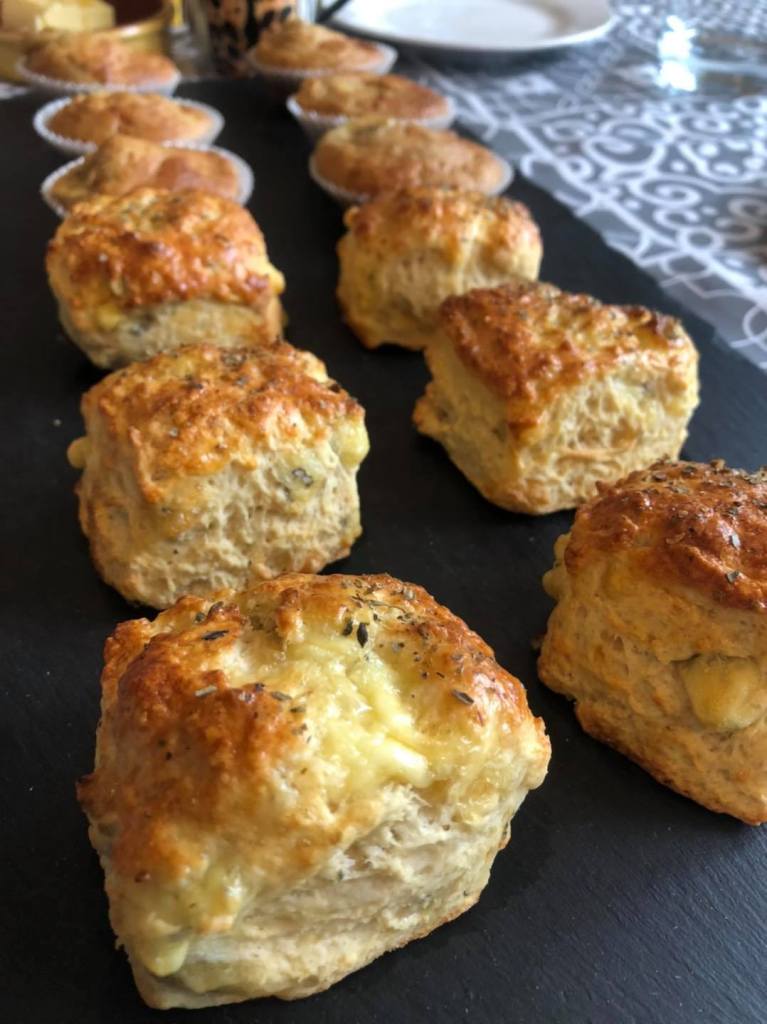
Salwaa’s Cheese Scones
Salwaa Smith – Cape Malay Cooking & Other Delights
From My Kitchen To Yours – keeping our heritage alive!
Ingredients:
2 cups self-raising flour, plus extra for rolling out
1 level tsp baking powder
Pinch of salt
55g butter, chilled and cut into small cubes
1/3 cup caster sugar
150ml buttermilk (approx)
125g French Blue Cheese or any strong cheese of choice
Method:
Pre-heat the oven to 200°C. Sift the flour, baking powder and salt. Rub in the butter until the mixture resembles breadcrumbs.
Stir in the sugar. Cut the cheese into small cubes. Add the cheese and buttermilk to the flour mixture.
Mix into a soft, but not sticky, dough. Lightly flour your hands and bring the dough together, handling it as little as possible.
Leave the dough to rest for 30 minutes. Turn the dough out onto a lightly floured surface and pat to a thickness of 2cm, lightly flour a 5cm pastry cutter and cut out as many scones as possible. I’ve used a square cookie cutter this time.
Transfer the scones onto a baking tray. Leave a space in between as the scones will spread somewhat. Gather the remaining dough together and repeat until used up. I got about 12 scones out of this mixture.
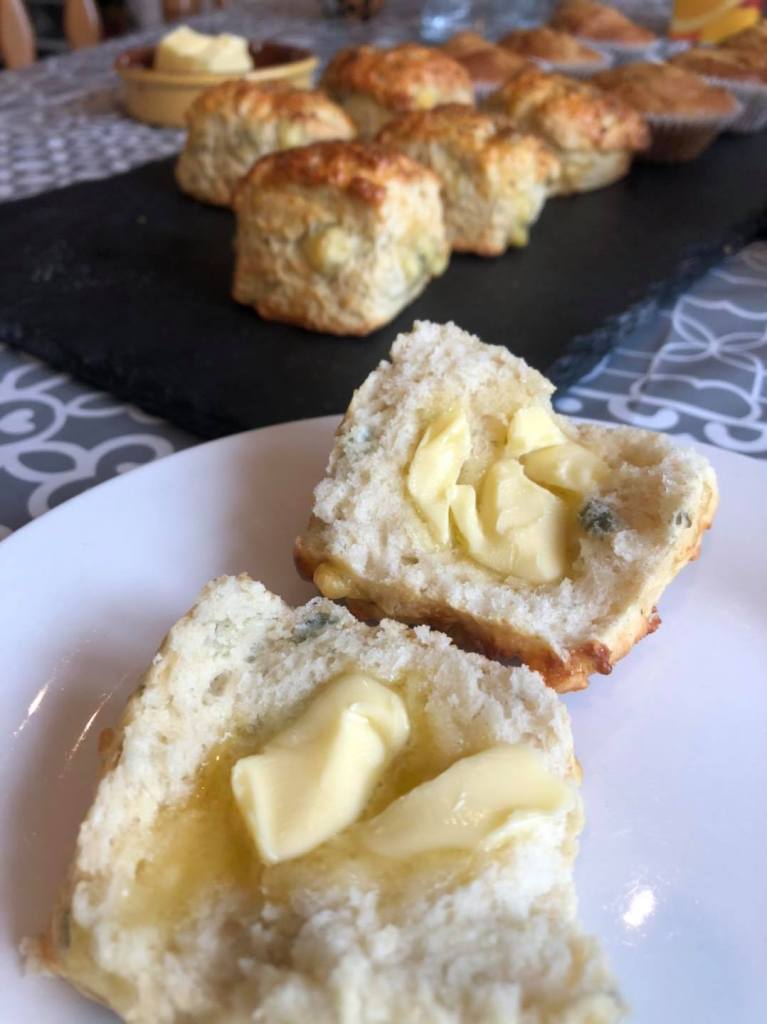
Brush the tops with milk or beaten egg. Dust with mixed herbs. Bake for 12-15 minutes until risen and golden. Cool on a wire rack until just warm, or leave to go completely cold. I served mine warm with lashings of butter.
Shop online at http://www.capemalaycookingdelights.com
 Cape Malay Cooking & Other Delights - Salwaa Smith
You must be logged in to post a comment.