Blog Archives
Shepherd’s Pie (Oond Frikkadel)
Shepherd’s Pie also known as Oond Frikkadel or Cottage Pie is a classic dish which pretty much everyone I’ve ever met has their own way of making. This is my way which I’ve kept really simple and it’s a winner every time I make it. Make sure you buy the best quality mince you can afford, as it really makes the dish, there’s nothing worse than an oily and fatty cottage pie. This recipe serves 6.
Shepherd’s pie” is made from lamb (hence “shepherd”), while “cottage pie” is made with beef.
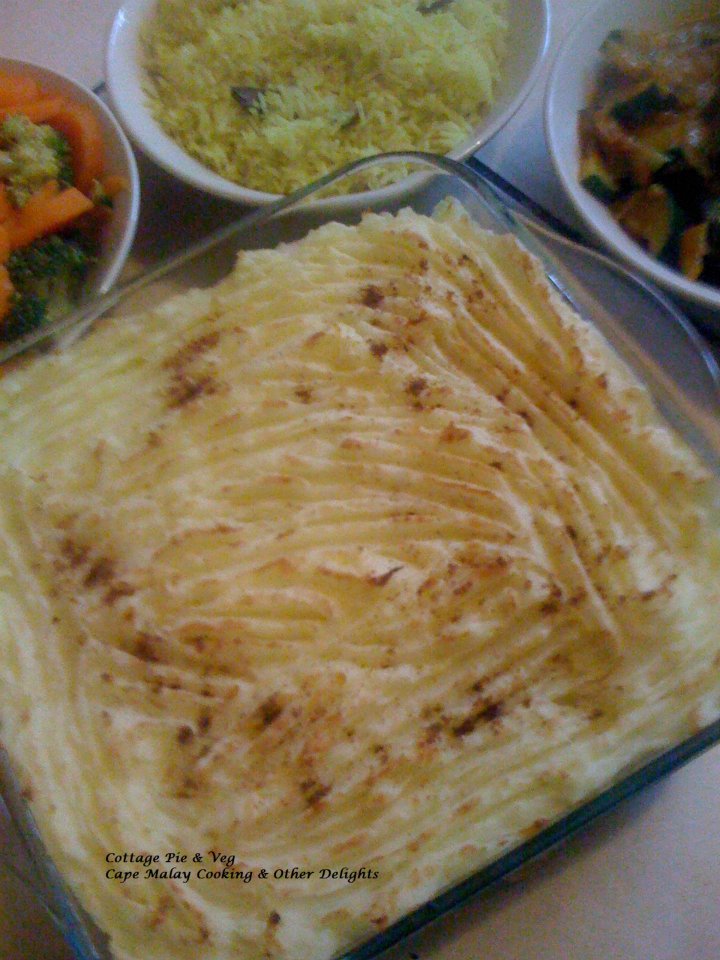 Shepherd’s Pie, Cottage Pie, Oond Frikkadel
Ingredients:
500g fat free minced meat
1 medium onion
1 small green pepper
1 medium tomato
1/2 bunch dhanya
1/2 teaspoon nutmeg
5 cloves garlic, grated
1 slice bread soaked in water (preferably day or two old)
1 large egg
salt & pepper to taste
Method:
Wash and drain minced meat well.
Soak bread in water and squeeze excess water out.
Chop onion, pepper, tomato, dhanya finely.
Add all the ingredients in a mixing bowl and mix thoroughly using your hands.
Transfer the mixture into an oven proof dish.
Bake in a preheated oven for 30-40 minutes at 180C.
Top with mashed potatoes and sprinkle with grated nutmeg.
Grill in the oven until top is slightly browned.
Serve with yellow rice, steamed vegetables or fresh salad.
 Yellow Rice
Yellow Rice Recipe
Serves 6
Ingredients:
2 cups uncooked basmati rice
¼ teaspoon turmeric
5 cardamom pods, crushed
3 stick cinnamons
50g butter
1 teaspoon salt
¼ cup sugar
½ cup raisins, optional
Method:
I always parboil my rice and then rinse as I don’t like the starch on the rice.
Using a large saucepan parboil the rice until half cooked approximately 5- 7 minutes.
Pour into a colander, rinse and return to the saucepan. Add the rest of the ingredients with a cup of water. Stir gently. Heat your saucepan over medium heat. Simmer for 6 minutes. Stir with a fork to fluff and loosen the grains, turn the heat off. Leave the sealed saucepan on the stove, the retained heat will complete the cooking process and any water left will be absorbed leaving you with fluffy and tender yellow rice.
Perfect with bobotie, frikkadel, roast, etc…
If you like my work or the free stuff on this website and want to say thanks, or encourage me to do more, you can buy me a coffee by clicking here⤵️
Paypal.me/capemalaycooks
SUBSCRIBE ► https://youtube.com/c/capemalaycooking
————————————————————————
BUY MY BOOKS ON:
Buy My Cookbooks And Merch Here
ADD ME ON:
Facebook: https://www.Facebook.com/capemalaycooking
Instagram: https://Instagram.com/capemalaycooking
Pinterest: https://Pinterest.com/capemalaycooking
Tiktok: https://tiktok.com/capemalaycooking0
Website: https://www.capemalaycookingdelights.com
Online Shop: https://capemalaycookingdelights.com/merchandise/
Dry Spicy Lamb Curry

Dry Spicy Curry, Potato Curry& Chapatti
Dry Spicy Lamb Curry
#capemalaycooking
Ingredients:
Serves 6 – 8
1 kg lamb pieces
1 cup plain yoghurt
2 tablespoons garlic paste
1 tablespoon ginger paste
2 tablespoons lemon juice
2 teaspoons garam masala
salt to taste
3 tablespoons vegetable oil
4 green chillies, slit lengthwise
2 teaspoons koljana/coriander powder
1 teaspoon jeera/cumin powder
2 medium tomatoes, chopped fine
Freshly chopped dhanya to garnish
Method:
Mix the lamb pieces with the yoghurt, garlic, ginger, lemon juice, garam masala and salt to taste, cover and allow to marinade for 3 hours.
Heat the oil in a deep pot on medium heat. Add the green chillies and fry until it stops spluttering.
Add the lamb with the marinade and fry stirring frequently for 5 – 7 minutes.
Now add the tomatoes, koljana/coriander and jeera/cumin powder and mix well.
Sprinkle some water over the meat, cover, lower the heat and cook till the meat is done.
Check occasionally and add more water if needed to prevent sticking and burning. Ideally this dish has a minimal amount of thick gravy.
Turn the heat off, garnish with freshly chopped dhanya.
Serve with warm chapattis (Indian flat breads) or naans.

Dry Spicy Lamb Curry
Potato Curry
Ingredients:
Serves 6
4 large potatoes
1 teaspoon cumin/jeera seeds
1/2 teaspoon finely chopped ginger
1 teaspoon finely chopped garlic
1 teaspoon coriander/koljana seeds (crushed)
1 teaspoon fennel/barishap seeds (crushed)
½ teaspoon chilli powder
2-3 slit green chillies
1/4 teaspoon turmeric
Handful Coriander leaves chopped
Salt to taste
30 ml cooking oil
Method:
Peel the potatoes and cut into bite size pieces.
Boil water in a sauce pan and then add the chopped potatoes and salt. Let it cook, but make sure there is still some bite to it.
After it is cooked, drain the water completely and keep aside.
Now heat a small pot and add some oil. Add the cumin/jeera seeds, garlic and ginger. Stir until garlic ginger is cooked and slightly browned.
Now add the crushed fennel/barishap seeds, coriander/koljana seeds, chilli powder and give it a stir.
Add the cooked potatoes, green chillies, salt and stir gently in intervals.
Let this cook for about 6-7 minutes until the sides have browned, spices are coated well. Add drops of water to prevent sticking to the pot and burning.
Finally garnish with coriander leaves.

Spicy Potato Curry
200g wholemeal flour
75ml warm water
2 tbsp butter
Sift the flour into a medium bowl and make a well in the middle of the flour. Pour in the water and mix to make a dough. Turn out onto a floured surface and knead for 5 -8 minutes until smooth and elastic. Place back in the bowl, cover with cling film and leave for 10 –15 minutes.

Chapatti (Indian Flat Bread)

Cape Malay Cooking
National Milk Tart Day
On 27 February South Africans celebrate National Milk Tart Day. Milk Tart (melktert) is a classical South African dish. Traditional Milk Tart is made up of a shortbread crust with a filling of milk and lots of eggs resulting in a lighter texture. Milk Tart can be enjoyed hot or cold. Milk tart (melktert) is thought to have originated in the latter half of the 17th century by Dutch settlers in South Africa. The Dutch East India Company established Cape Town in 1652 as a way-station for ships travelling from the Netherlands to Indonesia and back. Their ships would bring cinnamon and other spices to Cape Town (and Europe) from South East Asia. Local bakers used the imported cinnamon, combined with fresh dairy from farms in the Cape Colony, to create this wonderful custard based tart.

Here are a couple of recipe to start you off.
Traditional Cape Malay Milk Tart – this is a time consuming recipe but well worth it at the end. I can remember my mom making trays of melktert for functions and my job was to fill the trays with the base and I had to ensure there were no holes otherwise the melktert would flop and turn upside down! This recipe serves 6
Short Bread Base For Milk Tart
Ingredients:
1 egg
125 g butter
1/4 cup cooking oil
3/4 cup sugar
2 cups self raising flour
1 cup cake flour
1 teaspoon vanilla essence
l level teaspoon baking powder
Method:
Mix the egg, sugar, softened butter and oil together until light and fluffy. Add vanilla essence, mix. Add the flour and baking powder and mix well to form a soft ball of dough. Line a 20 cm by 20 cm oven proof dish with approx half of the pastry. (You can use the other half to make Herzoggies) The pastry should be as thin as possible with no holes. It is very important that the base contains no holes as it will cause the Milk Tart to bake upside down.
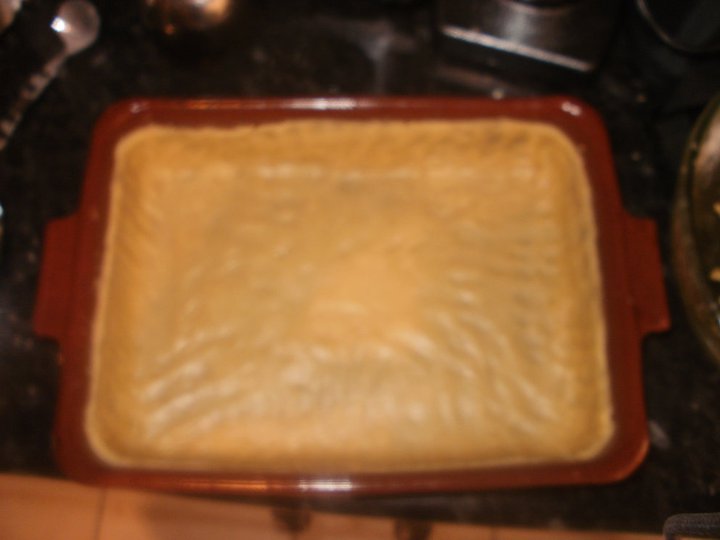
Filling
Ingredients:
1 litre + 1 cup milk
12 eggs
250 ml sugar
5 cardamom pods
2 stick cinnamons
Method:
Boil the milk in a saucepan with the cardamom and stick cinnamon . Allow to cool. Whisk the eggs and sugar until light and fluffy. Strain the cooled milk, using something like a very fine strainer or sieve. Combine the milk and the eggs mixture.Pour the filling into the dish ensuring not to pour all the liquid on one place as it may cause a “hole”. Bake in a preheated oven at 180 C for 40 minutes until set.

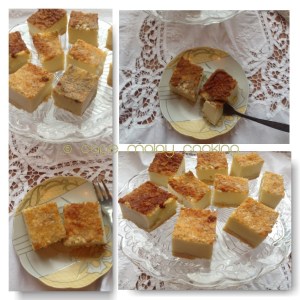
Milktart

Crustless Milk Tart
I made this quick and simple version of milk tart the other day. Although it’s no where as delicious as the traditional milk tart, everyone enjoyed it and it disappeared as quick as it was made. When it came out of the oven it was quite high but it sinks and becomes denser as it cools. The recipe serve 4
Ingredients:
¾ cup self-raising flour
2 cups milk
3 eggs
½ cup sugar
1 teaspoon vanilla essence
25 g melted butter
Pinch salt
½ teaspoon fine cinnamon
Method:
Put all the ingredients together into a bowl or food processor and beat to a smooth batter. Pour into a buttered pie dish, approximately 23 cm in diameter. Sprinkle the cinnamon over the top. Bake for 40 minutes at 180 C. Serve warm or cold

Chicken Jalfrezi
This is a Pakistani recipe for a spicy curry. The chicken is marinated before the time and then cooked in a thick onion sauce. You can always adjust the chillies if you find it’s to spicy hot.

Spicy chicken curry cooked in a thick sauce.
Serves 4
Ingredients:
For the sauce:
1 – 2 large onions, roughly chopped
1 tablespoon oil
4 garlic cloves, chopped
1 green chilli, chopped (you can use more if you like your food spicy & hot)
1 tin chopped tomatoes
1/2 litre of water
1 tablespoon ground coriander/koljana
1 tablespoon ground cumin/jeera
1 teaspoon turmeric/borrie
Salt to taste
For the chicken & veg:
500g chicken breasts, washed & diced up
2 tablespoons of oil
1/2 red pepper, roughly chopped
1/2 green pepper, roughly chopped
1 large onion, sliced roughly
2 red chillis (optional)
1 teaspoon ground cumin/jeera
1 teaspoon ground coriander/koljana
1 teaspoon turmeric/borrie
2 teaspoons garam masala
A handful of fresh, chopped dhanya leaves
Method:
Mix the jeera, koljana and tumeric in a small bowl, coat the chopped chicken breast pieces leave to marinade while you making the sauce.
Now make the sauce, fry the roughly chopped onions with the garlic and green chilli in a large saucepan with the tablespoon of oil until browned.
Add the water to the onion mixture and simmer this for around 20 minutes.
While that is simmering, put the chopped tomatoes in a food processor or liquidiser and give it a good whizz until smooth consistency.
Heat another large pan and gently fry the ground coriander, cumin and turmeric in a splash of oil for about a minute take care not too overheat or it will burn.
Add the liquidised tomato to this pan and simmer for around 10 minutes. (Because my family loves potatoes I added a couple of potatoes, quarted,
with the onion mixture when it was simmering whilst I prepared the chicken.)
Next give your onion mixture a good whizz in the food processor or liquidiser and add it to the spiced tomato sauce.
Stir and leave to simmer for another 10 minutes. Keep warm.
Fry the marinaded chicken in oil and stir continuously. When the chicken is nearly done approximately 10 -15 minutes,
turn down the heat and add the roughly chopped onion, red & green peppers and chillies. Stir this until the onions and pepper soften just a bit
and the chicken is cooked, of course. Don’t overcook as we don’t want the onions and peppers to cook away (I like mine to be firm and crunchy)
Add the earlier prepared sauce to the cooked chicken and simmer until combined about 5-10 minutes.
Just before you dish it up, stir in the garam masala and chopped dhanya leaves.
Serve with basmati rice or naan bread.
Variation:
Because my family loves potatoes I added a couple of potatoes, quarted, with the onion mixture when it was simmering whilst I prepared the chicken.
PRAWN CURRY
An easy, creamy prawn curry served with roti. Everyone will come back for seconds. Save time by preparing the chili paste the day before.

Delicious and easy prawn curry.
PRAWN CURRY SERVED WITH DHAI / YOGHURT SAUCE
Ingredients:
750g prawns
1 large onion, liquidised
2 medium onions, chopped fine
2 tablespoons chili paste (**see footnote)
3 bay leaves
½ tin coconut milk
4 cardamoms, crushed
Salt to taste
Oil for frying
Method:
Wash and dry the prawns in a kitchen towel. Set aside.
Heat the oil in a saucepan. Add bay leaves, cardamom and fry for a few minutes.
Add sliced onions and fry till golden brown.
Then add the liquidized onion paste and the chili paste. Fry for several minutes adding little water, as necessary, to prevent the masala from burning.
Add the prawns. Stir thoroughly and then add the coconut milk. Keep simmering in medium heat till the gravy reduces to a half. Add salt to taste.
Serve hot with rice or roti.
**Chili paste
Ingredients:
1 level teaspoon of chili powder
3 garlic cloves crushed
5 Red chilies chopped
3 Tablespoons of ground ginger
2 Pinches of salt
5 Tablespoons of extra virgin olive oil
1 Level teaspoon of sugar (can be omitted if preferred)
Method:
Heat oil to medium hot and add chili powder and garlic.
Cook for 2 minutes and then add all other ingredients.
Cook until soft. Decant into a blender and blend into a course paste.
Leave to cool and eat.
Refrigerate and consume within 7 days.

Serve with curry or breyani
DHAI / YOGHURT SAUCE
250m natural yoghurt
1 clove garlic, crushed
2-3 green chillies, chopped
1 tablespoon dhanya, chopped
Pinch salt
Mix all the ingredients together. Pour into a serving dish and serve with curries, breyani, kebabs, etc…
CHICKEN CURRY
Delicious chicken curry, always a winner no matter what the occasion. Serve with flaky roti, chapati (Indian flat bread) or plain boiled white rice. Traditionally served with onion and tomato salad.

Delicious Cape Malay Curry
CHICKEN CURRY
Ingredients
4 tbsp oil
2 cloves
1 stick cinnamon
2 green cardamom pods
1 tsp cumin seeds
1 small-medium onion, chopped
1½ tbsp chopped ginger
6 cloves garlic, chopped
½ tsp ground turmeric
1 tbsp ground coriander
½ tsp chilli powder
2 tomatoes, puréed
450g small chicken
½ tsp garam masala
1 handful chopped dhanya
Method:
Heat the oil in a large non-stick pan. Add the cloves, cinnamon, cardamom pods and cumin seeds and fry for about 20 seconds until aromatic.
Add the onion and cook for about 10 minutes until golden brown, stirring often. Stir in the ginger and garlic and cook stirring for 40 seconds before adding a pinch of salt and the ground spices, and stir for 15 seconds. Pour in the tomatoes and cook over a medium heat for about 10 minutes, until the liquid in the pan has dried off and the oil leaves the sides of the dry masala around 10 minutes.
**Add the chicken and brown over a medium-high heat for 3-4 minutes. Add enough water to almost cover the chicken (about 350ml), bring to the boil and then cook over a low heat until the chicken is cooked through. The slower it cooks the better it tastes. This takes about 15 minutes for small joints and up to 25-30 minutes for larger ones. Check with a fork; once it is tender it is done.
Add the garam masala and chopped dhanya. Serve with rice or roti.
Variation:
**Add potatoes cut in quarters with the chicken
ONION AND TOMATO SALAD
1 large onion, chopped finely
5ml salt
1 large firm tomato, chopped
2 green chillies, chopped
10ml sugar
30ml vinegar
2 teaspoons chopped dhanya
Steam the chopped onion in the microwave for 3 minutes. Combine with the rest of the ingredients. Transfer into a serving dish and enjoy with breyani, curry, etc…
Battle over bobotie
Article courtesy of Munadia Karaan (Voice of the Cape Radio)
FEATURE Part 1 – It is turning out to be a battle royal in food circles – is bobotie a true Cape Malay dish or is it “boerekos” that were merely made in the kitchen by slaves from the East? And as such, to whom does this heritage food belong? In the latest edition of De Kat, the debate is brought to the fore and for many food and heritage experts in the Cape Muslim community, it is about time that the matter is properly addressed, given how much of their heritage they have lost because of others claiming it or an inability to properly record it.
In a letter sent to the magazine earlier this year, author of Die Geskiedenis van Boerekos 1652 – 1806, W.W.Claassens took strong exception to “unfounded stories” by authors of the 20th century whom she said had not done the necessary research about the origin of traditional Afrikaner dishes. Bobotie, she wrote, is not a product or improvised dish based on an original recipe of the Cape Malays. After many years of research, she said she had proven that the names Cape Malays gave to food was their only contribution to the development of boerekos.
Claassens added that “the most important Afrikaans writers who were so eager about the contribution of the slaves to boerekos, are busy rewriting their books.” She bases her opinion on the claim that Eastern slaves were never a dominant group at the Cape and as such, they would not have been able to have a significant influence on the food of the Cape. Nor would the wives of the slave owners have allowed them to dominate in the kitchen by cooking foods from their homelands, even if they could afford to buy Eastern spices.
Other side
However, journalist and local food blogger, Johan Liebenberg, who wrote the De Kat article pointed out that several of Claassens assumptions were wrong. He quoted historical sources that sighted that by 1731, the slave population comprised 42% of the city’s population. He also pointed out the shortage of women in the early days at the Cape or the lack of knowledge among those who were here to cook with Eastern spices. Other historical sources confirm that slave women were an integral part of the households at the Cape in the era 1657 – 1808 and even in the 19th century, they played a key role in preparing meals, he wrote.
As for bobotie itself, Claassens claims that it stems from a Roman chef and added that its original name had long fallen by the wayside. However, Liebenberg’s research shows Dutch sources confirming that the dish came via the Cape of Good Hope from Indonesia or vice versa and from there was brought to the Netherlands around the 17th century. He even found proof of such recipes dating back to the 18th century where it was known as “bebotok”, close enough to bobotie.
Liebenberg believed that Claassens should have paid more attention to the role of the Dutch East India Company in the development of certain dishes in colonies it had occupied. From 1602 – 1796 the DEIC had almost a million employees in the East who all had to bring some influence from those countries with them when they returned home, especially with regards to food. It can also not be ignored that many of these officials had taken Eastern women as partners, which helped to create a Creolised culture in the early Cape with multiple influences from Europe, Africa and Asia, he argued.
Denying heritage
While he had great appreciation for the research Claassens had done, Liebenberg wrote, he concurred with the UNESCO view that there is not just one narrative on heritage studies. That, he wrote, is the story of our history. He points out that little is really known about the women or slaves at the early Cape. They were not in the habit of writing down their recipes when they were battling to survive while working in the kitchens, in gardens or elsewhere. “They have already been denied their heritage once. And now a second time?” he asked.
Meanwhile, a member in the Cape Muslim Family Research Forum pointed out that no spokesperson from the Cape Muslim community has stepped into the fray to contest the claim that Cape Malay food tradition has no historical ties. “Thus it is claimed that signature Cape Malay dishes merely have south East Asian labels, whilst the actual recipes are derived from the slave master’s kitchen,” he wrote.
“This is a type of age old Verwoerdian ideological approach with a narrow heritage lens of focussing on European food origins, whilst intentionally denying the Cape Muslim community its slave legacy of a rich Creolised food ways. We must add to the South African rainbow, not subtract from the national heritage legacy,” he said, urging a national debate on a long neglected issue.
More on this story on Sunday Live at 08h30. Also read Liebenberg’s full article here. VOC (Munadia Karaan)

Bobotie why so silent?
FEATURE Part 2 – Bobotie might be a cultural landmark in the country, widely recognised to come from Cape Muslim heritage, but there has been a virtual silence in the so-called “Cape Malay” community after an Afrikaner writer claimed that they had nothing more to do with the traditional dish than naming it. According to author of Die Geskiedenis van Boerekos 1652 – 1806, WW Claasens (79), bobotie was in fact true blue “boerekos”. In response food blogger Johan Liebenberg took on Claasens’ reasoning in the 6 June edition of De Kat. Speaking to VOC’s Sunday Live, Liebenberg also took issue with the silence on the issue from the Cape Muslim community.
According to Beeld of 22 April 2004, Claassens’s research into the cuisine of slaves in the 17th century showed that perceptions that the slaves had brought the the art of cooking with spices to prepare dishes such as bobotie to the Cape, were unfounded. Where the slaves came from, people were too poor to afford spices, and they mainly used chillies, turmeric and ginger, she said.
“Slaves didn’t bring any new dishes to the Cape,” she claimed. They only learnt in the Cape about cooking with spices and the typical dishes that were brought to the Cape, according to cookbook authors. Claassens stated that the dishes that formed part of the food culture in the Cape in the 20th century, known as boerekos, were essentially European.
The main contributors were Dutch, German and French cooking, which in turn had its roots in Roman, Persian and Arabic cuisine. Claassens said the Dutch wouldn’t have bought spices from the East if they didn’t have any knowledge about it. She traced curried fish, as we know it today, back to Belgium where it was prepared as early as 1500.
Refuted
This was hotly disputed and largely dismissed by Liebenberg, who told VOC in response: “What it proved to me was the fact that if you do a doctoral thesis or dissertation, you can arrange the facts as you like. That is why many – including in the foodie community in South Africa – accepted her opinion, because it seemed right as she expressed it.”
Liebenberg said that Claasens and her crew had used a book on the Arab influence in European food to prove that boerekos stemmed largely from European food. “But they largely forgot that there were influences from the Malay community.” He said he had to look at his own research and resources to dispute many of Claasens’ claims, amongst others that during the period in question slaves constituted 42% of the population and were not the minority as Claasens claimed.
“Some of my sources claimed that slaves were the majority, certainly as far as women were concerned,” he explained. Claasens also claimed that no European woman would give slave women the right to dominate in the kitchen on the preparation of dishes and the latter were anyway too poor to afford cooking with expensive spices. “I think that claim is ridiculous,” Liebenberg said shortly.
Silence
“But what I find more astounding is that no one in the Cape Malay community got up. And I am sorry if this is an indictment, but of all the historians in my beloved Malay community, why didn’t they get up and say this is not true? Why does it take an Afrikaner like me to say this is nonsense? She was awarded a PhD for this. There is a question begging,” Liebenberg stated.
Fellow panelist on Sunday Live, New Age journalist Yazeed Kamaldien, said that one reason for the silence might be the fact that people were so involved with bread and butter issues that it left little time to concern themselves with heritage issues. “But what is the bigger debate regarding Afrikaner heritage and culture? For example, we have had the issue of the Afrikaans language with people of colour coming forward to say it is their language as well.”
Liebenberg concurred and said it was necessary for his community to look at facts. “We regard ourselves as Afrikaner or whatever, but we are actually mixed. We are all a melting pot and we all have to realise that we are not one culture, but a hybrid of cultures. So we must get rid of our exclusivity in order for us to move forward a little bit.”
Afrikaners
Given that the Afrikaner community was very proud of its heritage, which it had tried hard to preserve, Kamaldien asked: “Why was it so relevant for this author to claim something as bobotie as part of the Afrikaner culture? Is it because people feel constantly threatened, that they need to hold onto their past so badly? We actually see it as journalists that white Afrikaners feel so downtrodden in a country that used to belong to them.”
While it was true that Claasens came from a different generation, Liebenberg said her attitude was not completely unique to others in her community. “For example, in 1992 there was only one Afrikaner folk festival. Today there are five. In other words, I think the Afrikaners feels threatened and want to grab onto things that they regard as theirs. Often much of what they believed in, no longer exists,” he explained.
Meanwhile, Liebenberg reiterated his affection for Cape Muslims and their rich culture that he has strongly advocated in his work. “I grew up among Malay friends in Milner Road. The border between Military Road and I was the Bo-Kaap. Sometime around 1994, I had been busy taking photos for an article on the Bo-Kaap. A Malay woman invited me in for tea and koesisters. Her daughter also appeared with her young baby and I never understood why they showed such wonderful hospitality towards me. Until this day I wish I could contact them again to thank them for it,” he said wistfully.
Comments
While authorative voices in the Cape Muslim community were largely silent, the matter did evoke strong debate and even humour online, including from many ex-pats. Commenting on Facebook, Nawhal said it was both ironic and refreshing that a white Afrikaner male was championing the cause of “Cape Malays” – a term that in recent years were seldom used and substituted for Cape Muslims, which some felt was more politically correct.
“Until this day our slave ancestors are being questioned on their food. Let’s hope someone with the necessary skills will come up with details on who bobotie really belongs to. I’m rooting for a Cape Malay slave, stolen from Penang, who worked as a cook in some Cape Dutch household and she should ‘suma’ also be the one who added cinnamon and cardamon to the once boring milk tart, turning it into a ‘regte melktert’, while bringing her version of Penang curry with flaky rooti to the Cape,” she quipped.
Naeem felt that it was at times like these that the passion showed by people like the late Dr Achmat Davids to preserve Cape Muslim heritage was sorely missed in setting the record straight. Fara in the US took a dig at Claasens: “She cannot let go of the past. Let it go Claassens, it’s over. Bobotie belongs to us, ‘die Slamse kinners’ Lol.” Shaheda added: “At least in the US, they admitted that if it was not for the natives and the slaves, they would have starved to death or died of bland food. Lol.”
Zuid Afrikaner commented on VOCFM: “The only ‘contribution’ the current Boere made to OUR bobotie, was to add apricot jam and flaked almonds to it, eek!” Even non-Muslims like Jo-anne weighed in on the debate. “I consider bobotie to be part of my cultural heritage – and it’s a great family favourite. My ancestors include slaves and indigenous people; Dutch and French settlers, so maybe it’s one of those dishes that celebrates our shared and entangled histories.”
Inclusion
Heritage fundi, Kammie was irate at the exclusion of the Cape Malay’s contribution by Claasens and her ilk. “Bobotie has enriched two South African culinary traditions – boerekos foodways and Cape Malay cuisine. Thus bobotie as the national dish symbolises the one signature recipe whereby food is the great democratic leveller regardless of social status, rank or station in life,” he wrote on VOCFM.
“Communities have embraced Cape Malay cuisine as part of the South African culinary tradition with copies of Cape Malay cookery books by Cass Abrahams, Fadiela Williams, Zainab Lagerdien, not forgetting Boorhanool Movement’s perennial Boeka Treats, which are bestsellers in SA households, regardless of race, creed and language. Let’s focus on our shared food traditions ranging from bobotie to sosatie, from Orania’s koeksusters to Bo- Kaap’s koesisters,” he urged.
Another ex-pat, Salwaa of Cape Malay Cooking who is based in the UK had quite a bit to say. “I always thought bobotie was a Malay dish brought with the slaves from Java and Indonesia etc. Since starting my blog, I did lots of research into authentic Cape Malay recipes and all the articles I came across was of the notion that bobotie is a Cape Malay dish which came with slaves who arrived from Java and various Indonesian islands in 1658. Being slaves, the Malays often ended up in the Dutch kitchens and their influence remains apparent in dishes such as bobotie etc.
“The origins of the name are not clear although in Indonesia ‘bobotok’ was an Indonesian dish consisting of meat with a custard topping that was cooked in a pan of water until the egg mixture set. It’s also one of those dishes that reflects the history of the country and the many cuisines that melts together to create what we now know as South African cuisine. Bobotie is a Cape-Malay creation, and they (the Malays) spiced it up even more with cumin, coriander and cloves, with influences from the Dutch who brought ground meat to the local cuisine, the spices were introduced by the slaves from Indonesia and the presentation is reminiscent of English shepherd’s pie.
“It’s interesting as well to note that frikadel is a popular dish in Germany (they even make kool frikadel I believe) and Holland amongst other countries. Frikadel is also known in Indonesian cuisine through Dutch influence as ‘perkedel’. I believe the spiciness of bobotie came from the Indonesians who brought the spices with them. This is one of the reasons I started my food blog, to keep our food culture alive and to make the recipes accessible to all. Otherwise who knows, we might have more of these debates regarding our other cultural dishes in the future,” she wrote. VOC (Munadia Karaan)
DOUGHNUTS
DOUGHNUTS
Ingredients:
500gr plain flour
1/2 cup sugar
1 packet instant yeast
1 egg
1 dessert spoon butter
Pinch salt
1 teaspoon vanilla essence
Milk
750ml vegetable for frying
Method:
Dissolve sugar and butter in on cup boiling water. Cool down. Add beaten egg, salt, vanilla essence and enough milk to make 1/2 liter liquid.
Combine flour and yeast in a mixing bowl. Add liquid and mix to soft dough. (The dough will be very soft)
Set aside covered until rise. Divide dough into approx 25 small balls on a slightly oiled surface. Heat the oil in large saucepan. Once oil is hot gently pull each doughnut into an oblong shape and fry each side until browned. Drain on absorbent paper.
Sugar Syrup:
Boil together, 500ml water and 250ml sugar until sugar has dissolved and syrup is slightly sticky and thickened. Dip doughnuts in syrup and sprinkle with desiccated coconut.
Variation:
Dip the doughnuts whilst lukewarm in a plate of white sugar
Dip cooled doughnuts in cold sugar syrup, make a slit length wise in doughnut, fill with strawberry jam and whipped fresh cream.

TRADITIONAL DOUGHNUTS
 Cape Malay Cooking & Other Delights - Salwaa Smith
You must be logged in to post a comment.