Blog Archives

Masala Chicken & Dhanya Rice
This masala chicken recipe is very special as it was made with my very own Cape Malay Cooking BBQ masala mix. This masala mix, as well as many other ready made spice mixtures, will be available end of September 2016, God willing. In the meantime if you wish to try this recipe you may use any BBQ spice from your local spice shop or supermarket.
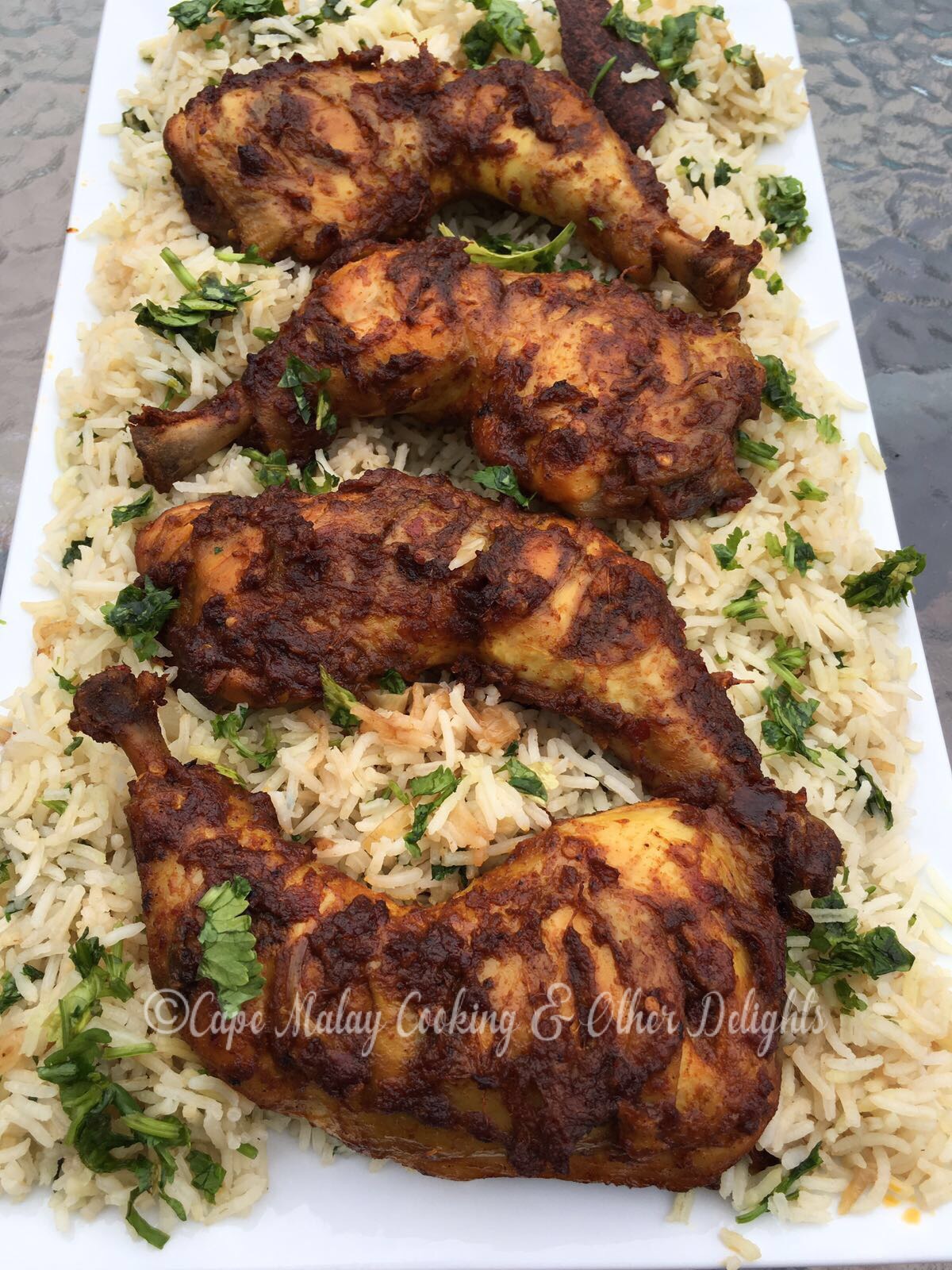
Masala Chicken
Ingredients for marinade:
6 chicken legs
2 tsp Cape Malay Cooking BBQ spice
1 tsp ground red chillies (or to taste)
2 dessert spoons paprika
1/2 tsp black pepper
1 tsp garlic paste
2 Tbsp oil
Enough lemon juice to make a paste (add a little at a time)
Mix all the above ingredients into a thickish paste
Taste for salt as the BBQ spice might have salt in it
Method:
Wash and dry the chicken legs. Make deep cuts into the chicken legs.
Rub the chicken legs all over with the spice make sure the whole leg is covered.
Put the marinade in a glass or stainless steel bowl, I don’t marinade in plastic containers to prevent it from staining.
Refrigerate the chicken for at least 2 hours or overnight.
Now here is my secret of this delicious, flavourful masala chicken.
Add little oil to a pot and cook chicken covered for about 10 minutes on medium heat for the flavours to infuse even further. Transfer the chicken into an oven proof dish. Pour any remaining liquid from the pot over the chicken.
Grill for a further 30 minutes at 200° Celsius, turning chicken over after 15 minutes and baste with any remaining sauce. The chicken is done when it’s nice and golden brown on the outside and juicy inside.
You may of course grill the chicken on your braai / BBQ as well. After all National braai day is coming up soon 🤗
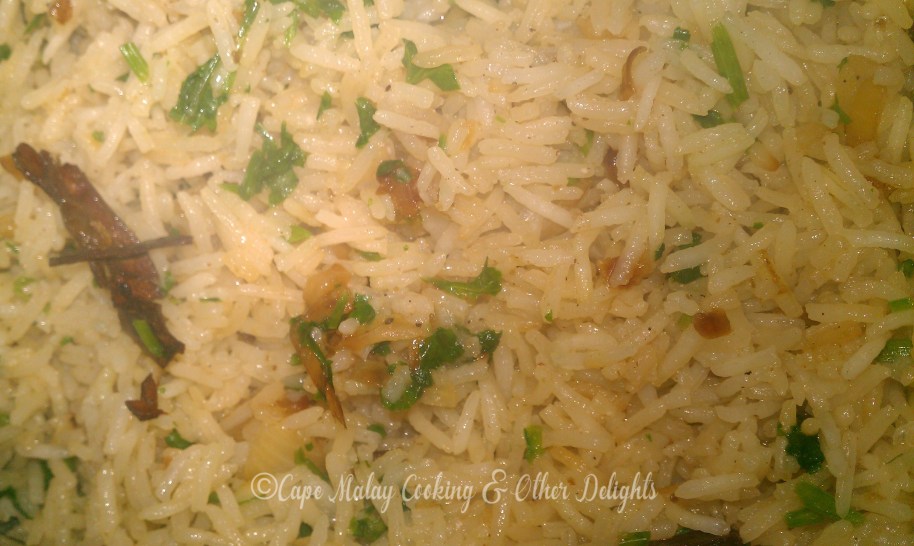
Dhanya / Coriander Rice
Dhanya Rice
This is a very simple yet flavourful rice to make. It can be served with a variety of different foods, e.g curry, frikkadel, meat or fish.
Ingredients:
2 cups uncooked long grain rice or basmati rice
1 onion, finely chopped
3 cardamom pods
2 stick cinnamons
100g butter
1 teaspoon salt
Handful chopped fresh dhanya / fresh coriander / cilantro
Method:
Parboil the rice until half cooked.
Pour into a colander, rinse, leave the rice in the colander whilst preparing the onions.
Heat your saucepan over medium heat, add the butter, melt until it starts to bubble and the colour changes to golden brown. Add the cardamom and stick cinnamon. Add the onions. Braise the onions until golden brown. Add the half cooked rice, salt and a cup of water. Heat the rice until warmed through. Add the dhanya, stir with a fork to loosen the grains and turn the heat off. Leave the sealed saucepan on the stove, the retained heat will complete the cooking process and any water left will be absorbed leaving you with fluffy and tender.
VARIATION:
Add a cup of mixed vegetables with the rice before steaming.
Add a tin of drained chick peas with the rice before steaming.
© Cape Malay Cooking & Other Delights
From My Kitchen To Yours – keeping our heritage alive!

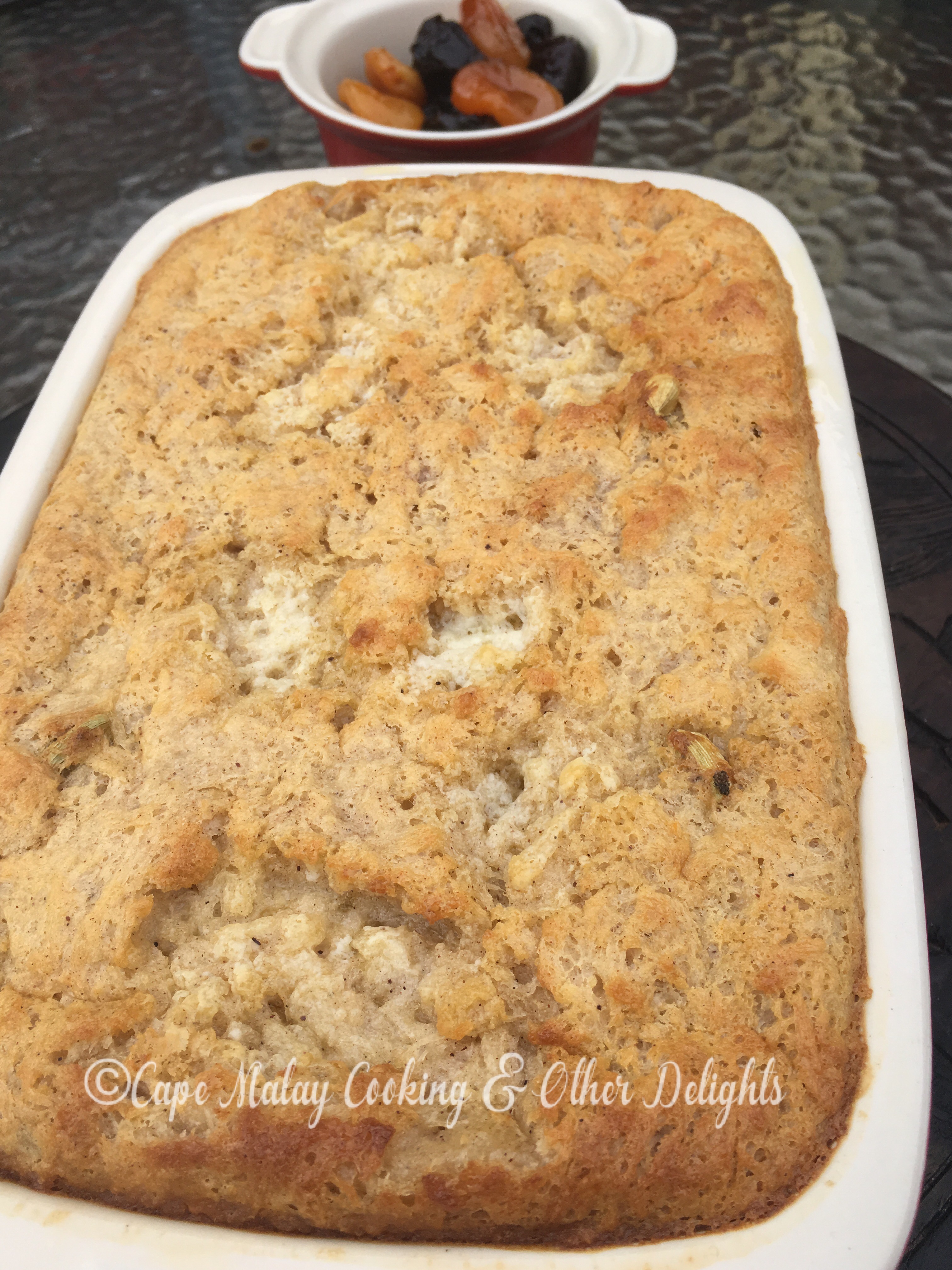
Brood Porring

Brood Porring Served With Served Stewed Fruit
Bread Pudding / Brood Porring
Ingredients:
6 – 8 large slices of white bread
1 litre milk
6 large eggs
1 cup sugar
2 teaspoons custard powder
1 teaspoon ground cinnamon
1 teaspoon ground cardamom
1/4 cup raisins, optional
4 tablespoons butter
Method:
Remove the crusts of the bread, cut the bread into squares. Soak the bread in the milk until soft.
Using an electric mixer, mix the eggs, custard powder and sugar together until the sugar has dissolved.
Add cinnamon and cardamom.
Mix in the bread and milk mixture.
Grease a 2 litre oven proof dish with half of the butter.
Gently pour the bread pudding mixture into the dish. Dot the remaining butter on top.
Bake in a preheated oven at 180° Celsius for 50 – 60 minutes, or until firm.
Cool slightly before eating. Serve with stewed dried fruit or apricot jam.
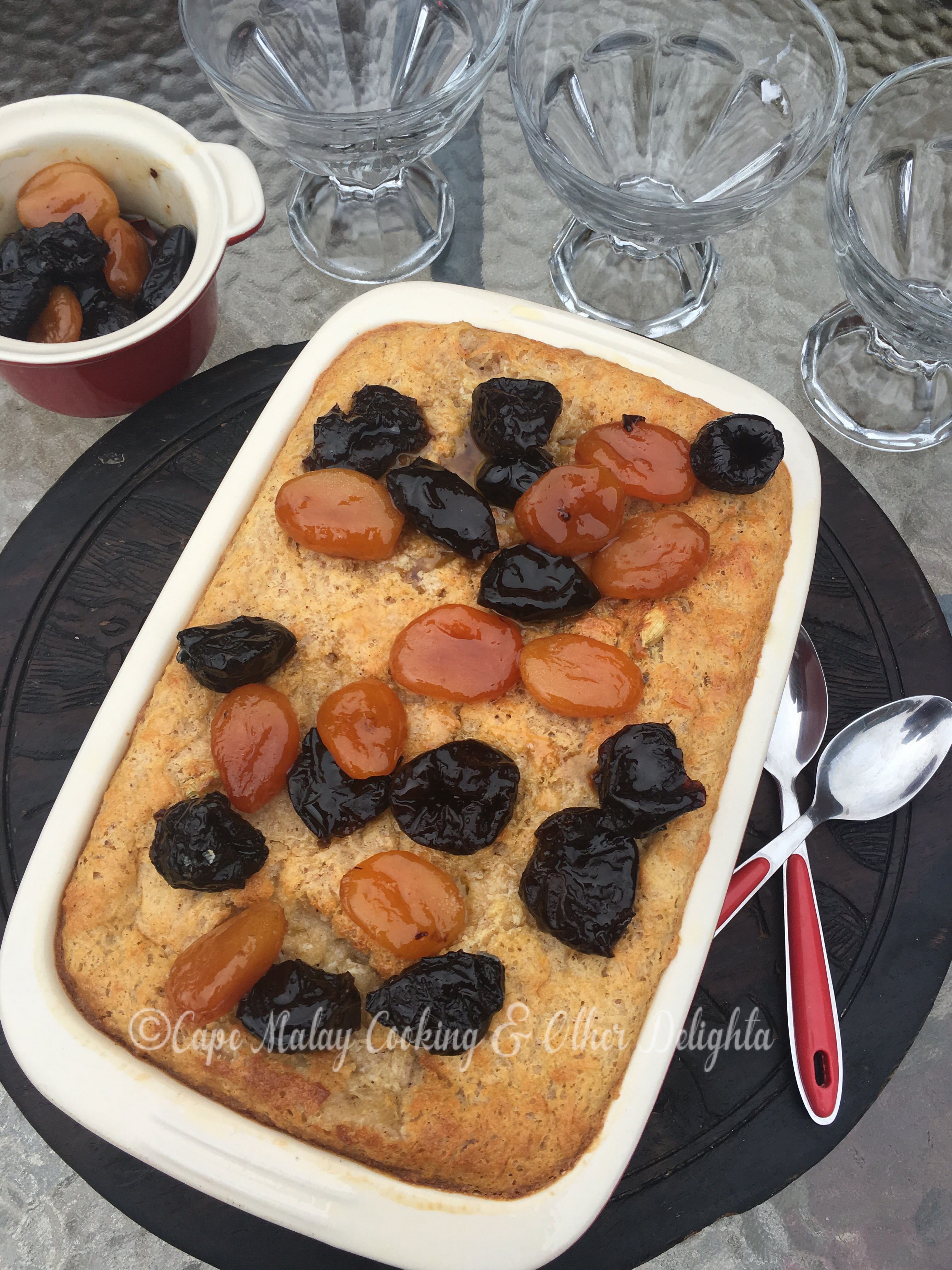
Stewed Dried Fruit
250g mixed dried fruit (I used only prunes and apricots here)
1 cup water
1/2 cup sugar
1 stick cinnamon
2 cloves
1 tsp lemon juice
Method:
Add all the ingredients, except the dried fruit and lemon juice, in a deep saucepan. Bring to the boil. Cook until sticky. Add the dried fruit and lemon juice. Cooks further 10 minutes until the dried fruit are soft. Add little water if the syrup becomes too sticky. Serve with bread pudding or potato pudding.
© Cape Malay Cooking & Other Delights
From My Kitchen To Yours – keeping our heritage alive!

Wholemeal Bread
Wholemeal Bread
Salwaa Smith – Cape Malay Cooking & Other Delights
From My Kitchen To Yours – keeping our traditions alive!
Nothing beats homemade bread straight from the oven. I remember my mom kneading bread every Sunday morning so it can be ready for supper. We’ll have it with polony, cheese, spiced beef or left over roast chicken from lunch. Fond memories of the good old days!
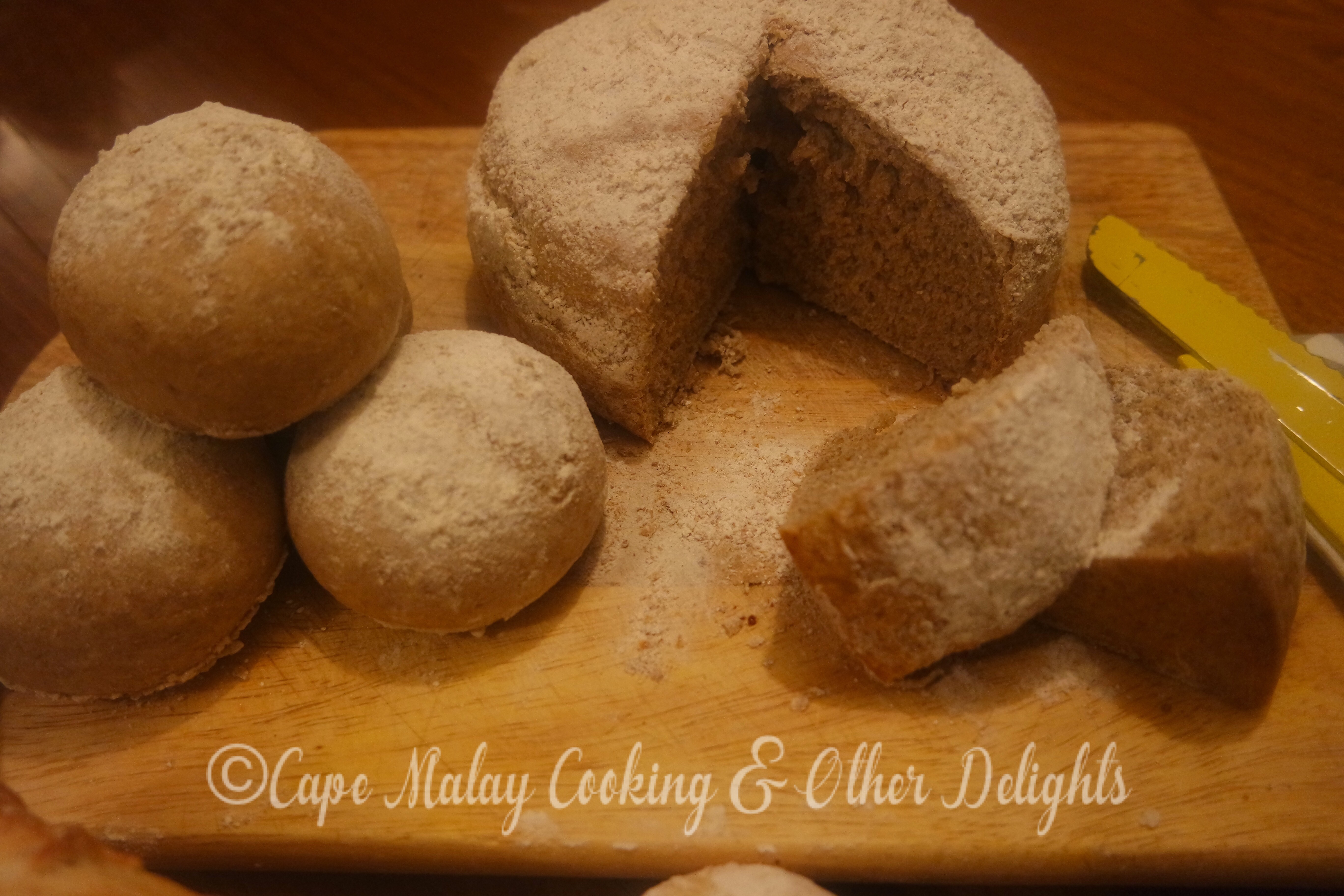
Wholemeal Bread
Ingredients:
4 1/2 cups wholemeal bread flour
1 & 1/2 tspsalt
2 tsps light brown sugar
1 packet instant yeast (7g)
About 1 & 1/2 – 2 cups of lukewarm water
Method:
Tip the flour into a large mixing bowl and all you do is simply sprinkle on the salt, sugar and yeast, mix these together thoroughly, make a well in the center and pour in the lukewarm water.
Mix the warm liquid into the flour gradually to form a dough (the exact amount of water you’ll need will depend on the flour) You can use you hands or a wooden spoon. I prefer using my hands. it is better to have too much water than too little.
Finish off by mixing with your hands until you have a smooth dough that leaves the bowl clean – there should be no bits of flour or dough remaining on the sides of the bowl.
Cover the mixing bowl with a clean plastic bag or cling film and leave to rest in a warm place until double in size.
Knock the dough down, now transfer the dough to a flat surface and stretch it out into an oblong.
Now fit the dough into the tin, pressing it firmly all round the edges so that the top will already be slightly rounded.
Next, sprinkle the surface with a generous dusting of flour, then cover the tin with a damp, clean tea cloth and leave to rise in a warm place for 30-40 minutes or at room temperature for about an hour.
If you’re making 2 loaves, divide the dough in half before following the steps above and folding it into the tins.
Meanwhile, pre-heat the oven to 200°C. When the dough has risen to the top of the bread tin or tins, bake the bread for 40 minutes for the big loaf tin or 30 minutes if you using 2 small loaf tins.
When the bread is cooked, turn it out on to a cloth to protect your hands – it will sound hollow when rapped underneath with your knuckles.
Cool the bread on a wire rack and enjoy with toppings of your choice 🙂
Or serve with your favourite bowl of soup
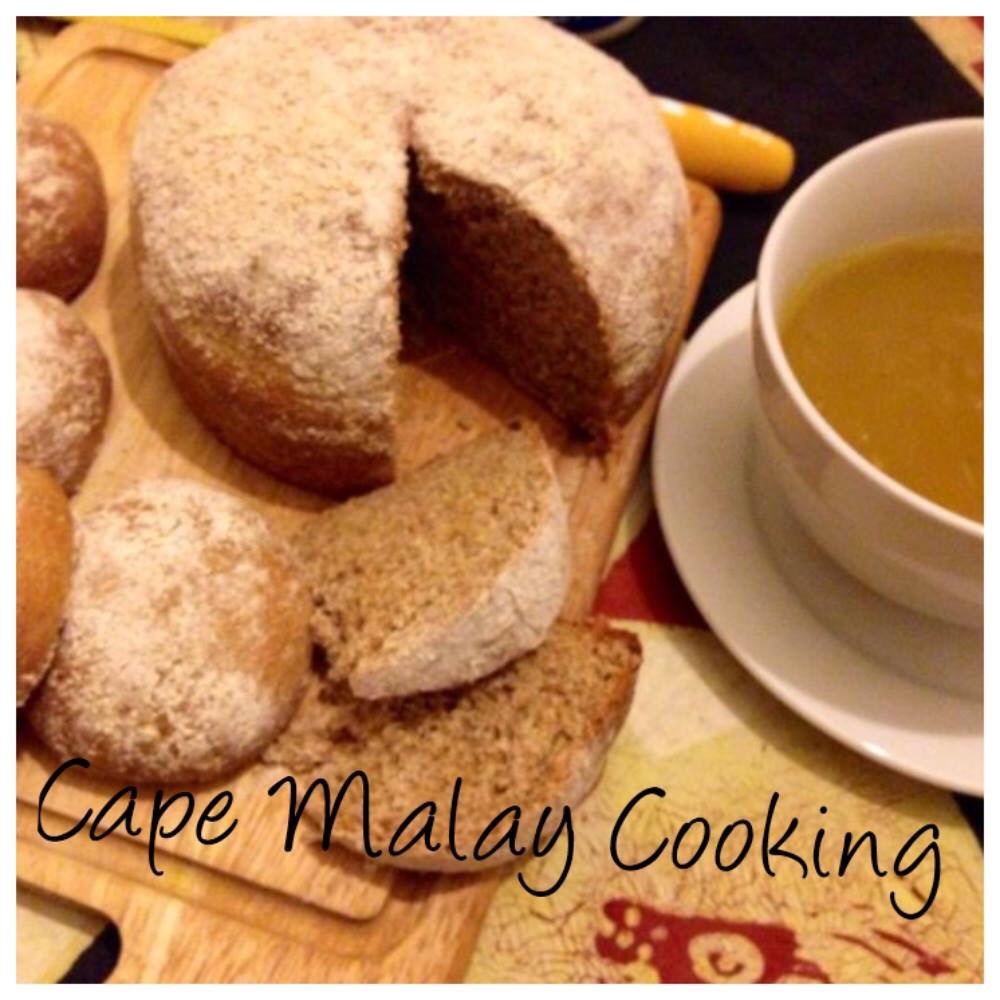
Cook’s Tip:
Makes 1 large loaf or 2 small loaves
I made one round loaf using a round cake tin and made bread rolls with the left over dough.


Malva Pudding

Deliciously moist pudding, serve with custard or enjoy on its own. Makes one large pudding or divide into ramekins.
Ingredients:
1 1/2 cups sugar
2 large eggs
2 cups milk
2 tsp brown vinegar
2 Tbsp smooth apricot jam
2 Tbsp butter
2 cups cake flour,(plain) sifted
1 tsp bicarbonate of soda
Method:
Preheat oven to 180° Celsius. Cream together sugar, jam and eggs. Melt butter and add vinegar add this to the sugar and egg mixture. Add the milk, flour and bicarb, mix well to combine all the ingredients. Pour into a pyrex dish (or something similar) and bake for 45 – 60 minutes. If you using ramekins the time will be considerably shorter. You’ll know its baked when the top is browned and a toothpick inserted in the middle comes out clean. Remove from the oven and pour the warm sauce over. Makes 6 – 8
TO MAKE THE SAUCE:
1 cup milk
1/2 cup boiling water
1/2 cup sugar
3 teaspoons butter
1 teaspoon caramel essence
Melt all the ingredients in a saucepan over low heat an pour over the cake.
#capemalaycooking
OR USE THIS RECIPE FOR A CREAMY SAUCE
250ml Cream
125ml butter
125ml sugar
125ml water/Orange juice
Melt together as per above sauce and pour over warm pudding
© Cape Malay Cooking & Other Delights
Salwaa Smith

Gulab Jamun
Gulab Jamun
Salwaa Smith – Cape Malay Cooking & Other Delights
Gulab Jamuns are popular in South Asian cuisine. Crunchy on the outside, soft and chewy inside. Gulab Jamuns can be eaten as a dessert with ice cream or fresh cream. It can also be made during Ramadan to share with family, friends and neighbours. It is a great alternative to koesisters or doughnuts.

Gulab Jamun
Ingredients:
1 tin condensed milk (497g)
3 Tbsp butter, melted
½ tsp bicarbonate of soda
2 tsp baking powder
2 Tbsp semolina
1 tsp ground cardamom
½ tsp rose essence
2 – 2¼ cups cake flour, sifted
Oil for deep frying
For The Syrup
2 cups water
2 cups sugar
1 tsp rose essence
Desiccated coconut to finish
Method:
Using a medium size bowl whisk the condensed milk and melted butter together. Add the ground cardamom, baking powder, bicarb, essence and semolina whisk until the mixture turn creamy. Gradually add the flour to form a soft dough. (You may not need the full 2¼ cups of flour.) Leave to rest for about 10 minutes. Divide the dough into 30 pieces. Roll the pieces of dough into balls or into oblong shapes. Best to use a slightly floured surface (and hands) as the dough might be slightly sticky.
In the meantime add the syrup ingredients in a pot and bring to the boil. Boil until the sugar water turns sticky. Remove from the heat but keep warm to dip in the cooked gulab jamuns when done.
Heat the oil in a deep pot and deep fry the gulab jamuns on medium heat, take care not to over crowd the pot as the gulab jamuns will swell considerably. Fry until deep brown stirring all the time to get an even colour all over. Remove and drain excess oil on kitchen paper. Cool slightly before dipping in the warm sugar syrup and rolling it in desiccated coconut.
Cook’s note:
You may not need all the flour, add the flour gradually
You may leave the jamuns drenched in the syrup of you like it sweet and syrupy until it is ready to be served.

Gulab Jamun

Raisin Buns
Raisin Buns – Cape Malay Cooking & Other Delights – Salwaa Smith

Freshly Bakes Raisin Buns
This time of the year brings back fond memories of many years ago. My late mom (may Allah/God grant her nur/light in her kubr/grave, ameen) used to make these buns to gift to our neighbours. She would knead and bake up to 5kg at a time. Imagine all those buns and all the people who enjoyed it. Here I’m sharing her recipe to make 24 buns but if your feel adventurous and generous make extra to share with your neighbours 😉
Makes 24
1 kg cake flour, extra for dusting
1 & 1/2 tsp salt
100 g soft butter
2 packets instant yeast (7 g packets)
2 Tbsp sugar
3 tsp mixed spice
2 tsp cinnamon powder
4 tsp ground aniseed
250g raisins or dried mixed fruit
2 – 3 cups warm water & milk mixture (half & half)

Raisin Buns – Before Baking

Raisin Buns Before Baking

Freshly Baked Spread With Lots Of Butter
Glaze:
2 Tbsp sugar
2 Tsp boiling hot water
In a large mixing bowl, mix together the flour and salt, rub in the butter. Stir in the yeast, sugar, spices and raisins. Mix in the water/milk to form a dough. Start with 2 cups first, gradually add the rest as needed. Certain flour needs a little more or less liquid so feel free to adjust. Mix until all the ingredients are fully incorporated.
Turn the dough out onto a lightly floured surface and knead for 10 minutes or so until the dough is soft and smooth.
Return the dough to the mixing bowl, cover with plastic wrap and leave to rise in a warm spot until double is size, about 2 hours.
Gently knock the dough down for the air to escape. Divide the dough into 24 pieces and shape into buns.
Place on a floured baking sheet cover with plastic and leave in a warm place to rise until double in size.
Bake for about 15 – 20 minutes in a preheated oven at 200 degrees Celsius.
To make the glaze, mix together the sugar and hot water until sugar has dissolved. Brush over the baked buns immediately after taking from the oven.
Suggestion:
Instead of making buns divide the dough into two, bake in loaf tins for raisin bread / loaves. Brush with glaze after baking.

Raisin Loaf

Raisin Loaf
© Cape Malay Cooking & Other Delights

Mutton Akhni
Salwaa’s Mutton Akhni
Cape Malay Cooking & Other Delights – Salwaa Smith
Akhni is basically a rice and curry dish which have been made into one. Mutton, lamb or chicken pieces are made into a dish very similar to curry and topped with rice. Basmati or long grain rice is best to use for this dish as with all rice dishes. Akhni is very often served at large gatherings and sometimes made over an open fire (BBQ). The taste of akhni made over an open fire changes completely in comparison to one made on an electric or gas stove. There are different versions of akhni available e.g. akhni is made in most Asian countries and varies by region. Here I share my version of Cape Malay akhni which is served with dhai, tomato and onion salad or various atchars.

Mutton Akhni
Ingredients:
1kg mutton/lamb pieces
6 medium potatoes, peeled and halved
1 heaped tsp of saffron
3 large onions, finely chopped
50g butter or margarine
1 cup buttermilk
1 large whole fresh green chilli, slit open
1 Tbsp garlic and ginger paste
1/2 cup chopped fresh dhanya
2 & 1/2 tsp salt, to taste
2 & 1/2 tsp red leaf masala/roasted masala
2 tsp ground jeera/cumin
2 tsp ground coriander/koljana
1 tsp chilli powder
2 tsp turmeric/borrie
4 – 5 cups basmati rice
1/2 cup cooking oil
2 tsp jeera seeds
1 tsp mustard seeds
2 bay leaves
6 cardamom pods, slit open
4 pieces of stick cinnamon
6 all-spices
6 cloves
Method
Wash the mutton pieces, drain and set aside. Boil the potatoes in a little water, till half-cooked but still firm. Infuse the saffron in 1 cup of boiling water and set aside.
Melt the butter in a pan and fry 1 chopped onion in the butter and set aside.
Place the mutton pieces in a large mixing bowl and add the buttermilk, green chilli, garlic and ginger paste, dhania, salt, red leaf masala, ground jeera, ground coriander, chilli powder, and turmeric. Mix thoroughly, ensuring that all of the mutton pieces are covered in the marinade. Set aside for 1 hour.
Rinse the rice in a colander, drain and place in a large pot on medium to high heat. Add water to reach halfway and add 1 teaspoon salt. Boil till half-cooked (the rice grains should be firm). Transfer to a colander and rinse under cold running water. Drain and set aside.
#capemalaycooking
Heat a large pot on medium to high heat, add the oil. Add the jeera seeds, mustard seeds, bay leaves, cardamom seeds, all-spices,cloves and cinnamon. Stir-fry for 1 minute then add the remaining chopped chopped and braise till golden in colour. Add the marinated mutton pieces along with the marinade, the 1 cup of water and simmer on medium heat for about 30 minutes, or till the meat is tender and cooked. Add more water if the meat becomes to dry.
Arrange the potatoes between the mutton pieces and spoon the rice directly on top. Pour the fried onion with the melted butter over the rice, and lastly pour the cup of water containing saffron plus 1 more cup of boiling water over the rice and onions. Turn the plate on high for 5 minutes, then lower it to low. Steam, covered, for 20 minutes. Turn the heat off, leave to “rest” for 10 minutes before serving with dhai and tomato & onion salad.
Note: All akhnis and breyanis should be dished from the bottom up.
Variation: The mutton may be substituted with lamb or chicken pieces (thigh, drumstick, wing and breast,) and prepared in exactly the same manner. Cooking time however will be less if using chicken or lamb. Note that the breast portion should be halved 🙂
How to make to tomato and onion salad
© Cape Malay Cooking & Other Delights

Tripe Curry
Tripe Curry (Pens Kerrie) – Salwaa Smith – Cape Malay Cooking & Other Delights
A traditional South African delicacy that remains a favourite in many homes. You either love it or don’t like it.

Tripe Curry / Pens Kerrie
Ingredients:
1 kg clean tripe
1 tsp salt
3 bay leaves
3 large onions, finely chopped
2 medium tomatoes, grated
2 tsp garlic
1 ½ tsp turmeric/borrie
1 ½ tsp coriander/koljana
1 green chilli, chopped
1 tsp chilli powder
1 tsp salt
2 tsp leaf masala
Method:
Boil the tripe with one teaspoon salt, bay leaves and enough water to cover until soft, about 2 hours. Drain and reserve the water. Allow the tripe to cool down before cutting it into strips. Set aside whilst making the sauce.
Fry the onions in a large pot until transparent and soft. Stir in the grated tomatoes, garlic, turmeric, coriander, green chillies, chilli powder, salt and the leaf masala. Simmer over low heat until the gravy is well blended and cooked through, this should take about 20 minutes to get a nice thick gravy. Add from the reserved water if needed. Add the strips of tripe and cook a further 15 minutes stirring every now and then, adding water if necessary. Serve with boiled white rice. Serves 6
Variation:
Add soft boiled sugar beans when adding the tripe
Add 1 cup of steamed gram dhal when adding the tripe.
Click here for details of where to by the NEW Cape Malay & Other Delights Cookbook
© Cape Malay Cooking & Other Delights

Ingelegde Vis (Pickled Fish)

Ingelegde Vis / Pickled Fish
Ingredients:
1kg snoek or any firm fish cut into large slices
1 cup brown vinegar
1/2 cup water
1/4 cup cooking oil
1/4 cup lemon juice
1/4 cup sugar
3 large onions, sliced
1 lemon, sliced
1 tsp whole peppercorns
1 tsp salt
2 tsp ground coriander / koljana
1 tsp ground cumin / jeera
1/2 tsp turmeric /borrie
1/4 tsp dry ginger
1/4 tsp cayenne pepper
5 bay leavesMethod:
Season the fish chunks with salt and pepper, and quick-fry till opaque in a well-oiled pan. Remove and set aside.

Yellow Tail
Wipe the pan, and fry the sliced onions till they turn golden. Add the liquids and the spices, raise to boil, turn low and simmer for about five minutes. Turn off heat, allow to cool slightly.
Arrange the fish chunks and sliced lemon in a pyrex or glass dish, and pour sauce over. Cover, and refrigerate when completely cold. Leave the pickled fish to marinade for a day or two before eating. The flavour improves the longer its left before eating and will keep up to 2 weeks in the refrigerator. Serve with crusty buttered bread.

Fried Yellow Tail
Ingelegde Vis / Pickled Fish

Peaches & Cream Sponge Cake
Peaches & Cream Sponge Cake – Salwaa Smith – Cape Malay Cooking & Other Delights
Use the summer fruit which is in abundance now in South Africa, to decorate your cakes and bakes.

Peaches & Cream Sponge Cake
Ingredients:
1 cup castor sugar
4 extra large eggs
1 cup sunflower oil
2 tsp vanilla essence
1 1/2 cups cake flour
1 cup self raising flour
2 tsp baking powder
1/2 cup milk
300 ml fresh cream, whipped
Fresh or canned fruit of choice to decorate
Melted chocolate, optional
Roasted dessicated coconut for the sides, optional
#capemalaycooking
Method:
Preheat oven to 180 degrees Celsius. Grease 2 x 20cm baking tin with butter and dust the baking tins with flour or line the tins with greaseproof paper.
Cream eggs, sugar and oil until light and fluffy or until sugar has dissolved. Add vanilla essence. Add flour and baking powder and stir well. Stir in milk and mix to combine until the mixture is a smooth dropping consistency. Pour into prepared tins and bake for 20 – 25 minutes. To check if cake is done insert a skewer in the middle of the cake, if it comes out clean it is done. Allow to cool slightly, turn out into a cooling rack to cool down completely. Sandwich the cakes together with smooth apricot jam or lemon curd, chopped peaches and some of the whipped cream. Spread the remaining cream over the top and sides, decorate with fresh or canned fruit.
© Cape Malay Cooking & Other Delights
Click here for details of where to buy your Cape Malay & Other Delights Cookbook
 Cape Malay Cooking & Other Delights - Salwaa Smith
You must be logged in to post a comment.