Blog Archives

Fish Breyani
 Fish Breyani
Fish Breyani – Cape Malay Cooking & Other Delights – Salwaa Smith
From My Kitchen To Yours – keeping our heritage alive since 2011!
Ingredients:
3 cups long grain rice or basmati rice
1½ cups frozen mixed vegetables
1 cup cooking oil
3 large potatoes
2 large onions, sliced thinly
1kg firm fish pieces of your choice, like hake or snoek
1 tomato, chopped
¼ cup buttermilk
1 – 2 green chillies, chopped
1½ tsp jeera / cumin
3 cloves
3 allspice
3 cardamoms
2 stick cinnamons
1 tsp salt
2 Tbsp butter
Fish Masala
7 cloves of garlic, minced
1 tsp salt
½ – 1 tsp chilli powder
3 tsp jeera / cumin
Juice of 2 lemons
1 tsp turmeric / borrie
1 Tbsp vegetable oil
Method:
Boil the rice in water until half done. Drain, rinse and set aside. Peel the potatoes, cut into slices. Heat the oil in saucepan, fry the potatoes until lightly browned and semi soft, set aside.
Drain excess oil from the saucepan, add the chopped onions, fry until golden brown. Add the chopped tomato, buttermilk, green chillies, jeera, cloves, allspice, cardamoms, stick cinnamon and salt.
Simmer over low to medium heat for 10 minutes or until onions are soft.
Meanwhile, make the masala to fry the fish. Combine all the spices in a small bowl, stir to combine. Wash and dry the fish pieces, smear the masala mixture all over the fish. Leave to sit for 10 minutes before frying in the left over oil used for frying the potatoes.
Arrange the potato slices at the bottom of a large heavy based pot / saucepan. Add half of the rice on top of the potatoes, spreading it evenly. Arrange the fish slices on top of the rice, then the onion mixture, then the mixed vegetables ending with the remaining rice. Dot the butter on top of the rice add 1 cup of hot water.
Cover and steam to complete over low to medium heat for about 20 minutes. Turn the heat off and leave to rest for 10 minutes before serving with lemon atchar or blatjang.
© Cape Malay Cooking
Cape Malay Koesisters
Koesisters – Cape Malay Cooking & Other Delights – Salwaa Smith
Traditional Sunday morning breakfast. Spicy version of doughnuts, this recipe makes 30 koesisters

Cape Malay Koesisters
Ingredients
500 grams cake flour (4 x 250ml)
1 teaspoon dry ginger powder
1 teaspoon cinnamon powder
1/2 teaspoon cardamom powder
2 teaspoons aniseed powder
Rind of 1 naartjie / satsuma, dried and ground (optional)
1 packet instant yeast
1/2 cup sugar
1 cup boiling water
1 dessert spoon butter
1 medium egg
milk as needed
750ml vegetable oil for frying
Method:
Using a measuring jug, melt butter and sugar in hot water. Stir in egg. Add enough milk to make 1/2 litre. Mix flour, spices and yeast into a mixing bowl. Add the liquid mixture to the dry ingredients and mix to a soft dough. Set dough aside, covered, to rise until double in size. Dip our fingers in a little oil, just to prevent the dough from sticking to your fingers. Divide dough into approx 30 small balls on a slightly oiled surface. Allow the koesisters to rise until double in size. Meanwhile heat oil in large, deep saucepan. Once the oil is very hot turn your stove down to medium to high. Gently pull the balls of dough one by one into an oblong shape and gently lower it into the hot boil. Fry each side until browned, about 2 minutes on each side. Remove with a slotted spoon and drain on absorbent paper. Cool completely.
Sugar syrup:
500ml water
250ml sugar
Boil water and sugar until sugar is dissolved and syrup is slightly thickened and sticky. Add drops of water if syrup becomes too sticky. Add the cold koesisters into the syrup a few at a time. Cook for a minute or so turning all the time so the whole koesister is coated with sugar syrup, remove from the syrup onto a serving plate. Sprinkle with desiccated coconut or make a slit in the middle of the koesister taking care not too go right through. Drop a teaspoonful of glazed coconut in the centre.
Cook’s tip:
Wash and dry the naartjie rind. Leave it out in the sun to dry out or if there’s no sunshine leave it in the oven on a very low temperature to dry out completely before grinding in a spice grinder.
To make the coconut filling
1 cup sugar
1 cup desiccated coconut
¾ cup water
3 cardamom pods
1 piece stick cinnamon
Boil all the ingredients together until all the water is evaporated and the coconut is glazed and sticky. About 10 minutes. Be careful not to burn as coconut burns very easily. The coconut mixture should be dry not watery. Remove cardamoms and stick cinnamon before using.
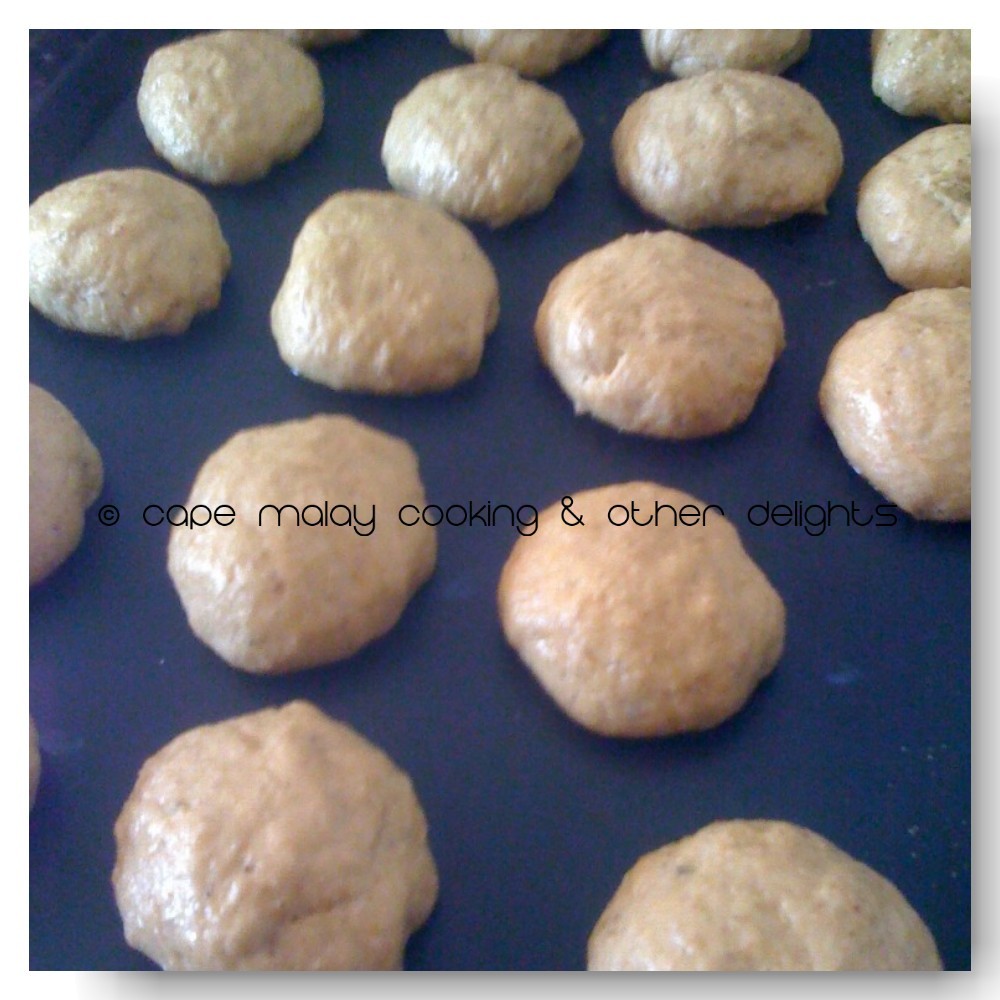
Little balls of dough before frying
Dip our fingers in a little oil, just to prevent the dough from sticking to your fingers. Divide dough into approx 30 small balls on a slightly oiled surface.

Frying one side
Allow the koesisters to rise until double in size. Meanwhile heat oil in large, deep saucepan. Once the oil is very hot turn your stove down to medium to high. Gently pull the balls of dough one by one into an oblong shape and gently lower it into the hot boil. Fry each side until browned, about 2 minutes on each side.

Frying

Koesisters draining on kitchen towel after frying
Remove with a slotted spoon and drain on absorbent paper. Cool completely.

Sugared koesisters
Sugar syrup:
500ml water
250ml sugar
Boil water and sugar until sugar is dissolved and syrup is slightly thickened and sticky. Add drops of water if syrup becomes too sticky. Add the cold koesisters into the syrup a few at a time. Cook for a minute or so turning all the time so the whole koesister is coated with sugar syrup, remove from the syrup onto a serving plate. Sprinkle with desiccated coconut or make a slit in the middle of the koesister taking care not too go right through. Drop a teaspoonful of glazed coconut in the centre.

Koesisters covered with desiccated coconut

To make the coconut filling
1 cup sugar
1 cup desiccated coconut
¾ cup water
3 cardamom pods
1 piece stick cinnamon
Boil all the ingredients together until all the water is evaporated and the coconut is glazed and sticky. About 10 minutes. Be careful not to burn as coconut burns very easily. The coconut mixture should be dry not watery. Remove cardamoms and stick cinnamon before using.


Dried naartjie / Satsuma peels
Wash and dry the naartjie rind. Leave it out in the sun to dry out or if there’s no sunshine leave it in the oven on a very low temperature to dry out completely before grinding in a spice grinder.

Dried naartjie / Satsuma peels
© Cape Malay Cooking & Other Delights
Pickled Fish (Ingelegde Vis)
Ingelegde Vis (Pickled Fish)
Pickled fish is traditionally made at Easter time. Pickled fish dates back to when there was no refrigerators and different means were used to preserve food. Any firm fleshed fish can be used to make this delectable dish. Yellow tail and Snoek are the most common fish used when making pickled fish.
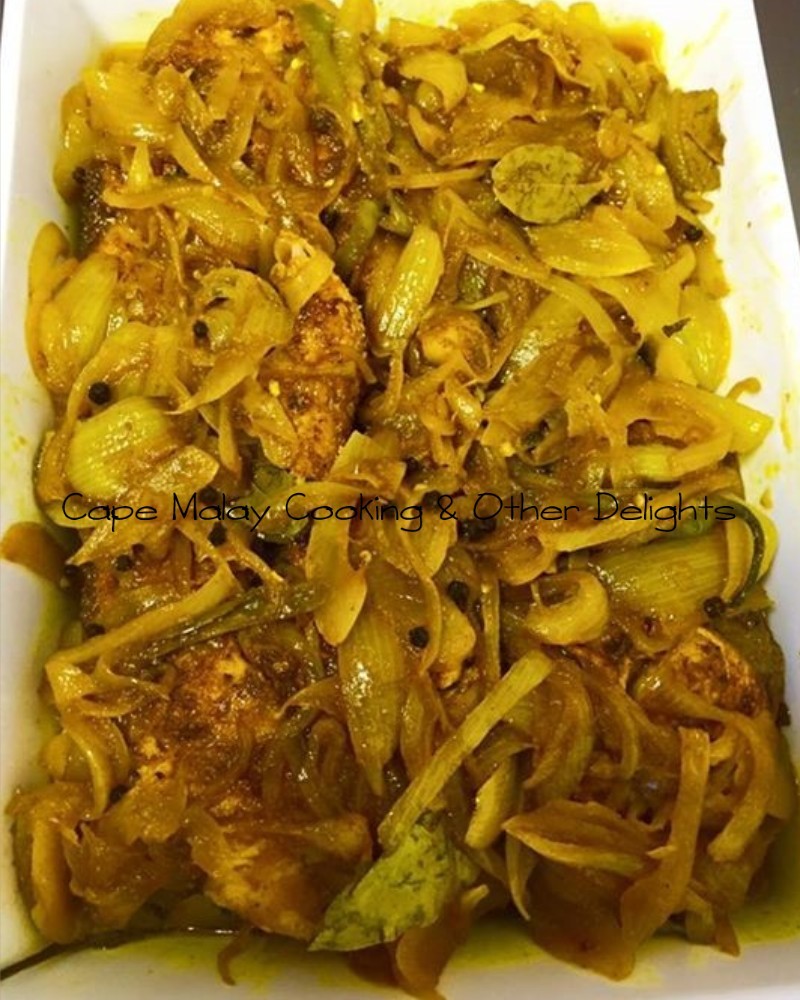
Pickled Fish / Ingelegde Vis
Serves 6
Ingredients:
1kg snoek or any firm fish cut into large slices
1 tsp salt
1/4 cup sunflower oil
1 cup brown vinegar
1/2 cup water
1/4 cup lemon juice
1/4 cup sugar
3 large onions, sliced
1 lemon, sliced
1 – 2 tsp whole peppercorns
1 tsp salt
2 tsp ground coriander / koljana
1 tsp ground cumin / jeera
1/2 tsp turmeric /borrie
1/4 tsp dry ginger
2 tsp fish masala (optional)
1/4 teaspoon chilli powder
5 bay leaves
Method:
Wash and drain the fish. Wipe the fish dry with a clean kitchen towel. Salt the fish slices. Heat a large saucepan over medium to high heat. Add the ¼ cup of oil. When the oil is warm, fry the fish five minutes on each side or until the fish is cooked thoroughly. Remove and set aside.
Wipe the pan with kitchen towel to remove the residue from the fried fish, and add the sliced onions and fry till they turn golden. Add the liquids and spices, bring to boil, turn low and simmer for about five minutes. Turn off heat, let cool to warm.
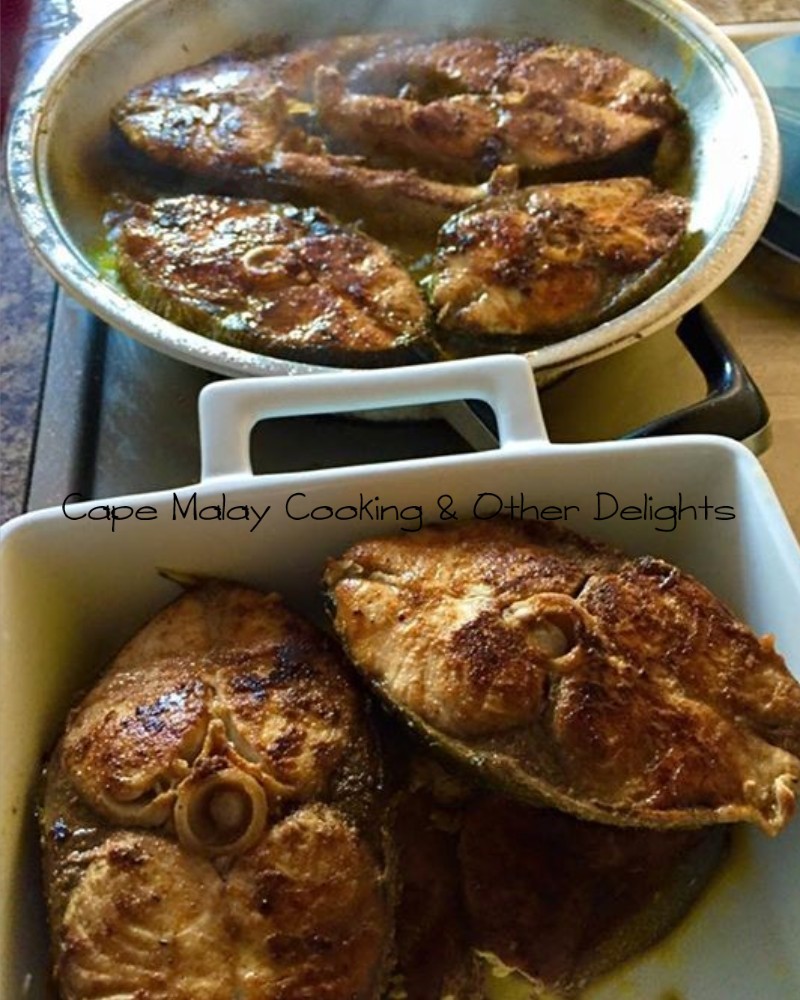
Fried Fish

Arrange the fish chunks and sliced lemon in a Pyrex or glass dish, and pour the sauce over. Cover, and refrigerate for a day or two before eating for the flavours to develop. The flavour improves the longer it’s left before eating and will keep up to 2 weeks in the refrigerator. Serve cold with crusty buttered bread.
Pickled Fish / Ingelegde Vis
Click here for details of where to buy the NEW Cape Malay & Other Delights Cookbook.

Cape Malay Cooking’s Raisin Buns / Bread

- Raisin Buns / Loaf

Ingredients:
To make 12 buns. The ingredients can easily be doubled to make 24 buns or 12 buns and a loaf.
450g cake flour (about 3 1/2 cups)
½ teaspoon salt
50g butter
1 packet instant yeast
50g sugar
1 teaspoon mixed spice
1 teaspoon ground cinnamon
2 teaspoons ground aniseed
125g raisins
250 – 300ml lukewarm water & milk mixture (half & half)
Glaze:
1 tablespoon sugar
1 tablespoon boiling hot water

Method:
In a large mixing bowl, mix together the flour and salt.
Rub in the butter.
Stir in the yeast, sugar spices and raisins.
Stir in the lukewarm water to form a sticky soft dough.
Knead on a lightly floured surface for 10 minutes or until the dough is smooth and doesn’t stick to the work top.
Cover the bowl with Clingfilm and leave to rise until double in size in a warm area.
Knock the dough down.
Divide into 12 pieces and shape into buns.
Place on a floured baking sheet cover with plastic and leave in a warm place to rise until double in size.
Bake for about 15 – 20 minutes in a preheated oven at 200C.
To make the glaze, mix together the sugar and hot water until sugar has dissolved.
Brush over the baked buns immediately once removed and leave to cool on a cooling tray.
© Cape Malay Cooking


Cape Malay Cooking’s Publications
Cape Malay Cooking’s mobile app is now available to download on ITunes as well as Google Play to be used on iPhone, iPad and all Android devices.
100 delicious Cape Malay Cooking recipes at your fingertips whenever and wherever you need it. Download yours today!



Roast Leg Of Lamb
Roast lamb
Serves 6 – 8
Serve this tender lamb with your favorite gravy and vegetables.
Ready in 3 hours – 3 1/2 hours, dependent on the size of your leg of lamb
Ingredients:
1 large head of garlic, lightly crushed
10 cloves
10 allspice berries
7 bay leaves
2 sprigs of fresh rosemary
1 whole large leg of lamb, bone in (about 2.5kg)
Salt & pepper to taste
Trim excess fat and rinse the leg of lamb under running water.

Preheat the oven to 190C.
Put the lamb into a large roasting tin /Pyrex dish . Using a sharp knife, make cuts in the lamb, about 1.5cm apart, all the way to the bone.
Rub salt and pepper all over the leg of lamb, don’t skimp on the pepper!

Lightly crush a head of garlic, not necessary to peel but do remove excess peels.

Scatter the head of garlic, cloves, allspice, bay leaves around the leg of lamb.

Top with the sprigs of rosemary.

Add a cup of water. Cover with foil. Cook in a preheated oven at 190C for 3 – 3 1/2 hours.

In the meantime prepare your vegetables. Remember you can use any vegetables you like.
Wash and half, if necessary, 1 kg baby potatoes. Drain excess water. Add the potatoes in a roasting / Pyrex dish. Add salt and crushed black pepper to taste. Drizzle a tablespoon or two olive oil over the potatoes and add a quarter cup of water. Cover with foil. Pop in the oven an hour before the leg of lamb is done. The potatoes will turn out crispy on the outside and soft in the inside.

Leg of lamb halfway through the cooking time.

Peel, de-seed and slice butternut into small pieces. Peel carrots and cut into smaller pieces. Melt 50g unsalted butter and 50ml vegetable oil in a saucepan. When the butter/oil begins to bubble add a a couple of stick cinnamon and the butternut pieces. Brown on each side.

Add the carrots, toss lightly so that the carrots are coated with the butter/oil mixture. Season to taste (salt and a bit of pepper will do) Cover and allow to steam over low heat until the vegetables are soft but not mushy.

Roasted potatoes.

Butternut and carrots, cooked.

Ready to eat 🙂

Serve with homemade peppercorn sauce
Ingredients:
3 – 4 tablespoons black peppercorns
80g butter
1 large onion, minced
120ml beef stock
100ml fresh cream
salt to taste
Method:
Crush the peppercorns slightly, either using a mortar and pestle or a rolling pin.
Melt the butter in a saucepan over medium high heat. Add the onions and saute until soft, about 3 minutes. Add the peppercorns and boil for another 3 minutes. Add beef stock and boil another 3 minutes.
Just before serving, add the cream and reduce the heat to medium. Heat through, but don’t allow the peppercorn sauce to boil. Once the sauce is at your desired thickness, test for seasoning. Add salt if necessary, then serve immediately.
Enjoy 🙂
Follow us on Facebook for more Cape Malay recipes.

Oats and Dates Muffins
This is a continuation of my previous post. Here is the recipe for my oats and dates muffins. This recipes makes 10 decent size muffins.

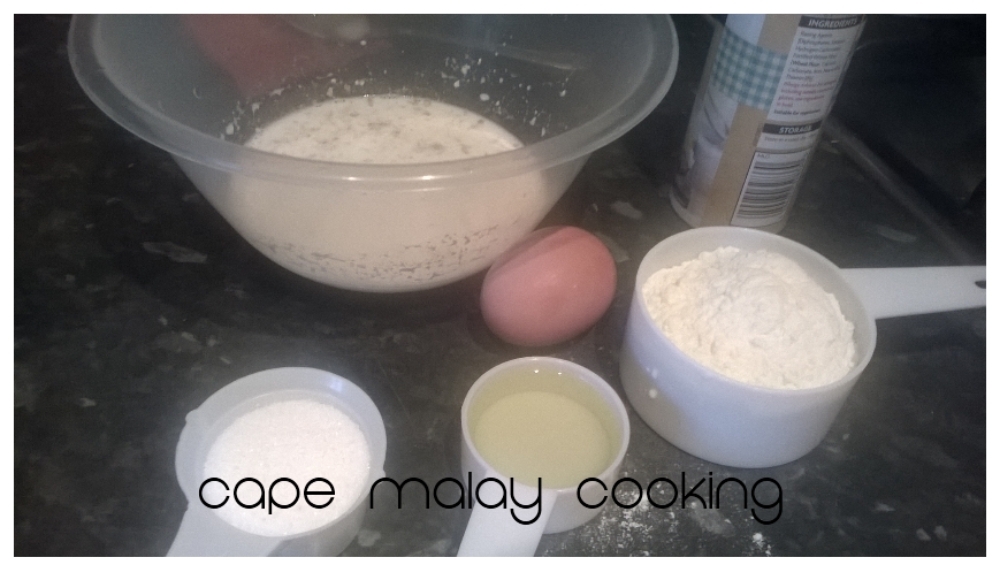
You will need:
1 cup milk, you may use whole or semi-skimmed
1 cup oats
1 large egg
1/4 cup sunflower oil
1 cup self raising flour
1/4 cup white sugar
1 tsp baking powder
1 cup chopped dates
1/2 tsp cinnamon powder
Preheat your oven to 200C. Grease a muffin tray or line with paper muffin liners.
Combine the milk and oats in a small bowl. Soak the oats and the milk for 10 minutes.

In a separate mixing bowl, beat together the egg and oil then stir in the oatmeal and milk mixture. In another bowl sift together the flour, cinnamon, sugar, baking powder. Stir the flour mixture and the chopped dates into the wet ingredients using a spoon, until combined.

Spoon the muffin batter into the prepared muffin cups until 2/3 full.

Top with dry oats
Bake in a preheated oven at 200C for 20 – 25 minutes or until a toothpick or skewer inserted into the centre of the muffin comes out clean.

Enjoy:)
 Cape Malay Cooking & Other Delights - Salwaa Smith
You must be logged in to post a comment.