Category Archives: General
Cape Malay cookbook highlights traditional recipes
Cape Malay & Other Delights Cookbook

Written by Yazeed Kamaldien
When Cape Town cookbook author Salwaa Smith moved to the United Kingdom 14 years ago she made sure her family would not forget the tastes of home.
Surrounded by cuisine from around the world in the UK, Smith cooked all the traditional Cape Malay stews and staples she grew up with in Surrey Estate suburb. She relied on her trustworthy typed-up a list of recipes from home.
Three years ago those recipes gained wider appreciation when Smith started the Cape Malay & Other Delights page on Facebook.
 Cape Malay cookbook author Salwaa Smith. Picture by Yazeed Kamaldien
This Facebook page currently has close on 100,000 subscribers, many of whom encouraged Smith to publish a book of recipes.
Earlier this month, Smith launched her self-published Cape Malay & Other Delights Cookbook in Cape Town, after an initial UK launch.
Smith says her desire to “create something” started…
View original post 975 more words
Cape Malay & Other Delights Cookbook
The RSVP date has been extended to 31st May to allow those who indicated they attending to book their tickets. Tickets can be ordered by calling 0786069655 or email enquiries@capemalaycooking.me

You are cordially invite…
Cape Malay & Other Delights Cookbook Launch by Salwaa Smith
Cost of my cookbook ONLY – R199 + R10 P&P within Cape Town and R25 nationwide.
3 course Cape Malay meal + a signed copy of my cookbook R250
Menu on the day will be:
Starter – cocktails pies, samosas, tandoori chicken, spicy meatballs
Main – lamb and chicken akhni
Dessert – assortment of Cape Malay biscuits, Cape Malay fancies (cream cakes) + tea, coffee & juice
Guest speakers – Mogamat Kammie Kamedien, independent slave scholar & community heritage activist
Vanessa De Bruin – family friend
Entertainment – members from the Young Men’s Malay Choir, the oldest and largest Malay Choir in South Africa
Abidah Dixon Mohamed from CTV’s “Proe” program will cover the event which will be broadcasted on CTV
When: 7th June 2015 @ 12pm
Venue: Grassy Park Civic Centre
Corner 5th Ave and…
View original post 169 more words
International Women’s Day
Many of you only know me by Cape Malay Cooking & Other Delights however since its International Women’s Day tomorrow (08/03/15) I’d like to share my story with you all, Insha’Allah/ God willing I hope to inspire you all to follow your dreams and aspirations in life.
My interest in baking started in the kitchen with my mother being her assistant peeling the potatoes and taking mental notes of recipes and handy tips, you’d think by me spending all the time in the kitchen I’d one day be a brilliant cook but once I got married and left the nest I felt lost in the kitchen I had no clue what I was doing! Cooking was very much my mother’s domain, I was the baker which suited me perfect at the time because my sweet tooth was always pleased!
My husband will often recall the first time I cooked a meal and what an inedible disaster it was, I bravely and very confidently told him that morning I was going to cook fish frikadel. I wish I hadn’t, it turned out burnt, mushy and definitely did not look like the way my mother’s use to.
However, that did not put me off cooking, I was determined and dedicated my time to perfect my cooking skills. Inspiring and words of praise from my family was what really determined me, my mother inspired me to do better and was always ready to criticise and advise me. My husband bought me Faldiela Williams cook books and from then onwards everything changed and I can safely say my cooking has changed for the better, the aromas, colours and pure passion to be found in Cape Malay cooking is a form of art all on its own.
In 2007 I attended a women empowering course where I learnt, suffice to say, words CHANGE LIVES. The course taught us that words can move mountains but they can also break spirits. They can also build, support, and yes, EMPOWER. Words have brilliance and the potential power to set free emotions strong enough to overwhelm each and every one of us. Words provoke us, inspire us and motivate, make us fall in love, go to war and save lives. We need to as women, encourage and support each other after all we can most likely relate to each other. I feel I have honestly felt the support from YOU ALL with your many words of encouragement.
Thank you all (87 000+ FOLLOWERS) for your continuous support.
Who inspires you and why?
Salwaa Smith – Cape Malay Cooking & Other Delights

Eid Mubarak
Eid Mubarak
As Ramadan leaves us, we pray that Allah accepts from us all the acts of worship that we have been diligently performing during this month, and may He give us the ability to maintain our determination and enthusiasm that He blessed us with – Ameen!
Battle over bobotie
Article courtesy of Munadia Karaan (Voice of the Cape Radio)
FEATURE Part 1 – It is turning out to be a battle royal in food circles – is bobotie a true Cape Malay dish or is it “boerekos” that were merely made in the kitchen by slaves from the East? And as such, to whom does this heritage food belong? In the latest edition of De Kat, the debate is brought to the fore and for many food and heritage experts in the Cape Muslim community, it is about time that the matter is properly addressed, given how much of their heritage they have lost because of others claiming it or an inability to properly record it.
In a letter sent to the magazine earlier this year, author of Die Geskiedenis van Boerekos 1652 – 1806, W.W.Claassens took strong exception to “unfounded stories” by authors of the 20th century whom she said had not done the necessary research about the origin of traditional Afrikaner dishes. Bobotie, she wrote, is not a product or improvised dish based on an original recipe of the Cape Malays. After many years of research, she said she had proven that the names Cape Malays gave to food was their only contribution to the development of boerekos.
Claassens added that “the most important Afrikaans writers who were so eager about the contribution of the slaves to boerekos, are busy rewriting their books.” She bases her opinion on the claim that Eastern slaves were never a dominant group at the Cape and as such, they would not have been able to have a significant influence on the food of the Cape. Nor would the wives of the slave owners have allowed them to dominate in the kitchen by cooking foods from their homelands, even if they could afford to buy Eastern spices.
Other side
However, journalist and local food blogger, Johan Liebenberg, who wrote the De Kat article pointed out that several of Claassens assumptions were wrong. He quoted historical sources that sighted that by 1731, the slave population comprised 42% of the city’s population. He also pointed out the shortage of women in the early days at the Cape or the lack of knowledge among those who were here to cook with Eastern spices. Other historical sources confirm that slave women were an integral part of the households at the Cape in the era 1657 – 1808 and even in the 19th century, they played a key role in preparing meals, he wrote.
As for bobotie itself, Claassens claims that it stems from a Roman chef and added that its original name had long fallen by the wayside. However, Liebenberg’s research shows Dutch sources confirming that the dish came via the Cape of Good Hope from Indonesia or vice versa and from there was brought to the Netherlands around the 17th century. He even found proof of such recipes dating back to the 18th century where it was known as “bebotok”, close enough to bobotie.
Liebenberg believed that Claassens should have paid more attention to the role of the Dutch East India Company in the development of certain dishes in colonies it had occupied. From 1602 – 1796 the DEIC had almost a million employees in the East who all had to bring some influence from those countries with them when they returned home, especially with regards to food. It can also not be ignored that many of these officials had taken Eastern women as partners, which helped to create a Creolised culture in the early Cape with multiple influences from Europe, Africa and Asia, he argued.
Denying heritage
While he had great appreciation for the research Claassens had done, Liebenberg wrote, he concurred with the UNESCO view that there is not just one narrative on heritage studies. That, he wrote, is the story of our history. He points out that little is really known about the women or slaves at the early Cape. They were not in the habit of writing down their recipes when they were battling to survive while working in the kitchens, in gardens or elsewhere. “They have already been denied their heritage once. And now a second time?” he asked.
Meanwhile, a member in the Cape Muslim Family Research Forum pointed out that no spokesperson from the Cape Muslim community has stepped into the fray to contest the claim that Cape Malay food tradition has no historical ties. “Thus it is claimed that signature Cape Malay dishes merely have south East Asian labels, whilst the actual recipes are derived from the slave master’s kitchen,” he wrote.
“This is a type of age old Verwoerdian ideological approach with a narrow heritage lens of focussing on European food origins, whilst intentionally denying the Cape Muslim community its slave legacy of a rich Creolised food ways. We must add to the South African rainbow, not subtract from the national heritage legacy,” he said, urging a national debate on a long neglected issue.
More on this story on Sunday Live at 08h30. Also read Liebenberg’s full article here. VOC (Munadia Karaan)

Bobotie why so silent?
FEATURE Part 2 – Bobotie might be a cultural landmark in the country, widely recognised to come from Cape Muslim heritage, but there has been a virtual silence in the so-called “Cape Malay” community after an Afrikaner writer claimed that they had nothing more to do with the traditional dish than naming it. According to author of Die Geskiedenis van Boerekos 1652 – 1806, WW Claasens (79), bobotie was in fact true blue “boerekos”. In response food blogger Johan Liebenberg took on Claasens’ reasoning in the 6 June edition of De Kat. Speaking to VOC’s Sunday Live, Liebenberg also took issue with the silence on the issue from the Cape Muslim community.
According to Beeld of 22 April 2004, Claassens’s research into the cuisine of slaves in the 17th century showed that perceptions that the slaves had brought the the art of cooking with spices to prepare dishes such as bobotie to the Cape, were unfounded. Where the slaves came from, people were too poor to afford spices, and they mainly used chillies, turmeric and ginger, she said.
“Slaves didn’t bring any new dishes to the Cape,” she claimed. They only learnt in the Cape about cooking with spices and the typical dishes that were brought to the Cape, according to cookbook authors. Claassens stated that the dishes that formed part of the food culture in the Cape in the 20th century, known as boerekos, were essentially European.
The main contributors were Dutch, German and French cooking, which in turn had its roots in Roman, Persian and Arabic cuisine. Claassens said the Dutch wouldn’t have bought spices from the East if they didn’t have any knowledge about it. She traced curried fish, as we know it today, back to Belgium where it was prepared as early as 1500.
Refuted
This was hotly disputed and largely dismissed by Liebenberg, who told VOC in response: “What it proved to me was the fact that if you do a doctoral thesis or dissertation, you can arrange the facts as you like. That is why many – including in the foodie community in South Africa – accepted her opinion, because it seemed right as she expressed it.”
Liebenberg said that Claasens and her crew had used a book on the Arab influence in European food to prove that boerekos stemmed largely from European food. “But they largely forgot that there were influences from the Malay community.” He said he had to look at his own research and resources to dispute many of Claasens’ claims, amongst others that during the period in question slaves constituted 42% of the population and were not the minority as Claasens claimed.
“Some of my sources claimed that slaves were the majority, certainly as far as women were concerned,” he explained. Claasens also claimed that no European woman would give slave women the right to dominate in the kitchen on the preparation of dishes and the latter were anyway too poor to afford cooking with expensive spices. “I think that claim is ridiculous,” Liebenberg said shortly.
Silence
“But what I find more astounding is that no one in the Cape Malay community got up. And I am sorry if this is an indictment, but of all the historians in my beloved Malay community, why didn’t they get up and say this is not true? Why does it take an Afrikaner like me to say this is nonsense? She was awarded a PhD for this. There is a question begging,” Liebenberg stated.
Fellow panelist on Sunday Live, New Age journalist Yazeed Kamaldien, said that one reason for the silence might be the fact that people were so involved with bread and butter issues that it left little time to concern themselves with heritage issues. “But what is the bigger debate regarding Afrikaner heritage and culture? For example, we have had the issue of the Afrikaans language with people of colour coming forward to say it is their language as well.”
Liebenberg concurred and said it was necessary for his community to look at facts. “We regard ourselves as Afrikaner or whatever, but we are actually mixed. We are all a melting pot and we all have to realise that we are not one culture, but a hybrid of cultures. So we must get rid of our exclusivity in order for us to move forward a little bit.”
Afrikaners
Given that the Afrikaner community was very proud of its heritage, which it had tried hard to preserve, Kamaldien asked: “Why was it so relevant for this author to claim something as bobotie as part of the Afrikaner culture? Is it because people feel constantly threatened, that they need to hold onto their past so badly? We actually see it as journalists that white Afrikaners feel so downtrodden in a country that used to belong to them.”
While it was true that Claasens came from a different generation, Liebenberg said her attitude was not completely unique to others in her community. “For example, in 1992 there was only one Afrikaner folk festival. Today there are five. In other words, I think the Afrikaners feels threatened and want to grab onto things that they regard as theirs. Often much of what they believed in, no longer exists,” he explained.
Meanwhile, Liebenberg reiterated his affection for Cape Muslims and their rich culture that he has strongly advocated in his work. “I grew up among Malay friends in Milner Road. The border between Military Road and I was the Bo-Kaap. Sometime around 1994, I had been busy taking photos for an article on the Bo-Kaap. A Malay woman invited me in for tea and koesisters. Her daughter also appeared with her young baby and I never understood why they showed such wonderful hospitality towards me. Until this day I wish I could contact them again to thank them for it,” he said wistfully.
Comments
While authorative voices in the Cape Muslim community were largely silent, the matter did evoke strong debate and even humour online, including from many ex-pats. Commenting on Facebook, Nawhal said it was both ironic and refreshing that a white Afrikaner male was championing the cause of “Cape Malays” – a term that in recent years were seldom used and substituted for Cape Muslims, which some felt was more politically correct.
“Until this day our slave ancestors are being questioned on their food. Let’s hope someone with the necessary skills will come up with details on who bobotie really belongs to. I’m rooting for a Cape Malay slave, stolen from Penang, who worked as a cook in some Cape Dutch household and she should ‘suma’ also be the one who added cinnamon and cardamon to the once boring milk tart, turning it into a ‘regte melktert’, while bringing her version of Penang curry with flaky rooti to the Cape,” she quipped.
Naeem felt that it was at times like these that the passion showed by people like the late Dr Achmat Davids to preserve Cape Muslim heritage was sorely missed in setting the record straight. Fara in the US took a dig at Claasens: “She cannot let go of the past. Let it go Claassens, it’s over. Bobotie belongs to us, ‘die Slamse kinners’ Lol.” Shaheda added: “At least in the US, they admitted that if it was not for the natives and the slaves, they would have starved to death or died of bland food. Lol.”
Zuid Afrikaner commented on VOCFM: “The only ‘contribution’ the current Boere made to OUR bobotie, was to add apricot jam and flaked almonds to it, eek!” Even non-Muslims like Jo-anne weighed in on the debate. “I consider bobotie to be part of my cultural heritage – and it’s a great family favourite. My ancestors include slaves and indigenous people; Dutch and French settlers, so maybe it’s one of those dishes that celebrates our shared and entangled histories.”
Inclusion
Heritage fundi, Kammie was irate at the exclusion of the Cape Malay’s contribution by Claasens and her ilk. “Bobotie has enriched two South African culinary traditions – boerekos foodways and Cape Malay cuisine. Thus bobotie as the national dish symbolises the one signature recipe whereby food is the great democratic leveller regardless of social status, rank or station in life,” he wrote on VOCFM.
“Communities have embraced Cape Malay cuisine as part of the South African culinary tradition with copies of Cape Malay cookery books by Cass Abrahams, Fadiela Williams, Zainab Lagerdien, not forgetting Boorhanool Movement’s perennial Boeka Treats, which are bestsellers in SA households, regardless of race, creed and language. Let’s focus on our shared food traditions ranging from bobotie to sosatie, from Orania’s koeksusters to Bo- Kaap’s koesisters,” he urged.
Another ex-pat, Salwaa of Cape Malay Cooking who is based in the UK had quite a bit to say. “I always thought bobotie was a Malay dish brought with the slaves from Java and Indonesia etc. Since starting my blog, I did lots of research into authentic Cape Malay recipes and all the articles I came across was of the notion that bobotie is a Cape Malay dish which came with slaves who arrived from Java and various Indonesian islands in 1658. Being slaves, the Malays often ended up in the Dutch kitchens and their influence remains apparent in dishes such as bobotie etc.
“The origins of the name are not clear although in Indonesia ‘bobotok’ was an Indonesian dish consisting of meat with a custard topping that was cooked in a pan of water until the egg mixture set. It’s also one of those dishes that reflects the history of the country and the many cuisines that melts together to create what we now know as South African cuisine. Bobotie is a Cape-Malay creation, and they (the Malays) spiced it up even more with cumin, coriander and cloves, with influences from the Dutch who brought ground meat to the local cuisine, the spices were introduced by the slaves from Indonesia and the presentation is reminiscent of English shepherd’s pie.
“It’s interesting as well to note that frikadel is a popular dish in Germany (they even make kool frikadel I believe) and Holland amongst other countries. Frikadel is also known in Indonesian cuisine through Dutch influence as ‘perkedel’. I believe the spiciness of bobotie came from the Indonesians who brought the spices with them. This is one of the reasons I started my food blog, to keep our food culture alive and to make the recipes accessible to all. Otherwise who knows, we might have more of these debates regarding our other cultural dishes in the future,” she wrote. VOC (Munadia Karaan)
Top Ten Recipes of 2012
It was quite a year for Cape Malay Cooking & Other Delights. This blog as well as my Facebook page grew beyond my wildest expectations in the past year and that is entirely thanks to you, my CMC friends. Thank you so much for joining me and the thousands of others who have been part of Cape Malay Cooking in the past year.
I am delighted to report readers from 99 countries visited capemalaycooking.wordpress.com in 2012. Thank you to each and everyone who took the time out to read my blog, left a comment or tried out a recipe or 2.
The top 10 countries who visited my blog were: South Africa, United Kingdom, Australia, United States, Germany, New Zealand, Canada, Saudi Arabia, France and United Arab Emirates.
Top 10 recipes of 2012
Based on the number of times it was viewed.
10. Shepherd’s Pie (Oond Frikkadel)
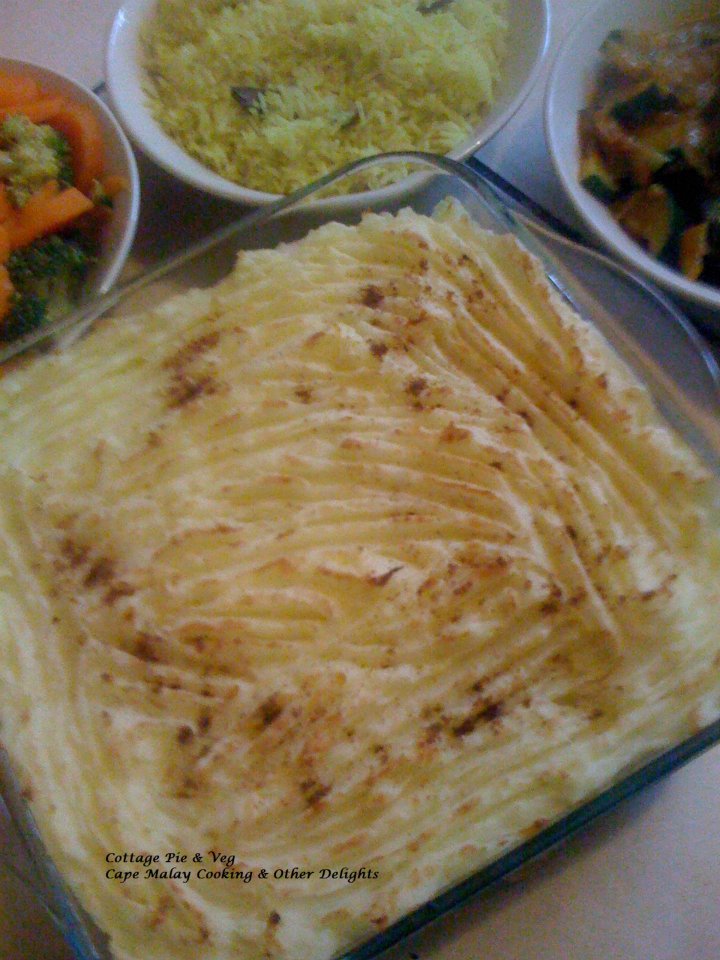
Shepherd’s Pie, Cottage Pie, Oond Frikkadel
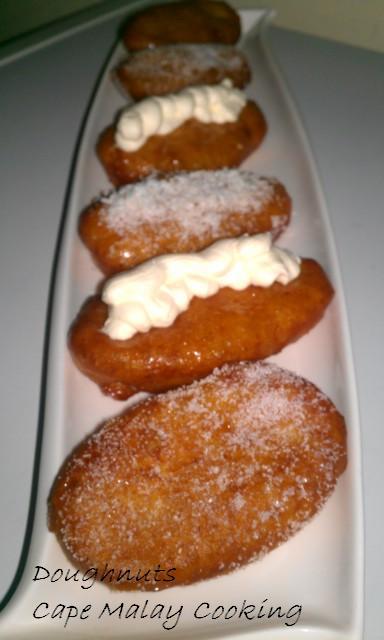
8. Doughnuts
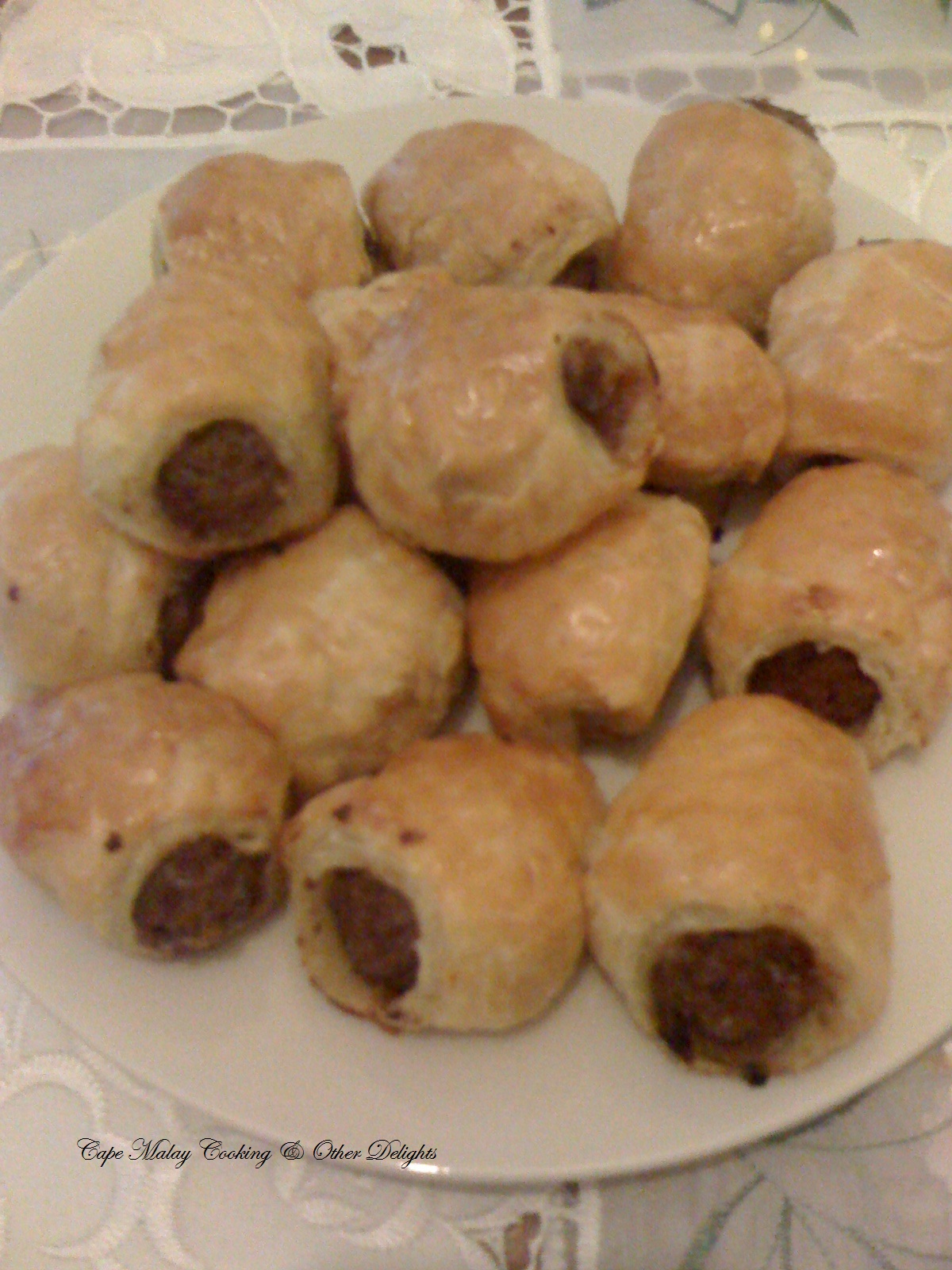
7. Samosas

FRIED SAMOSA
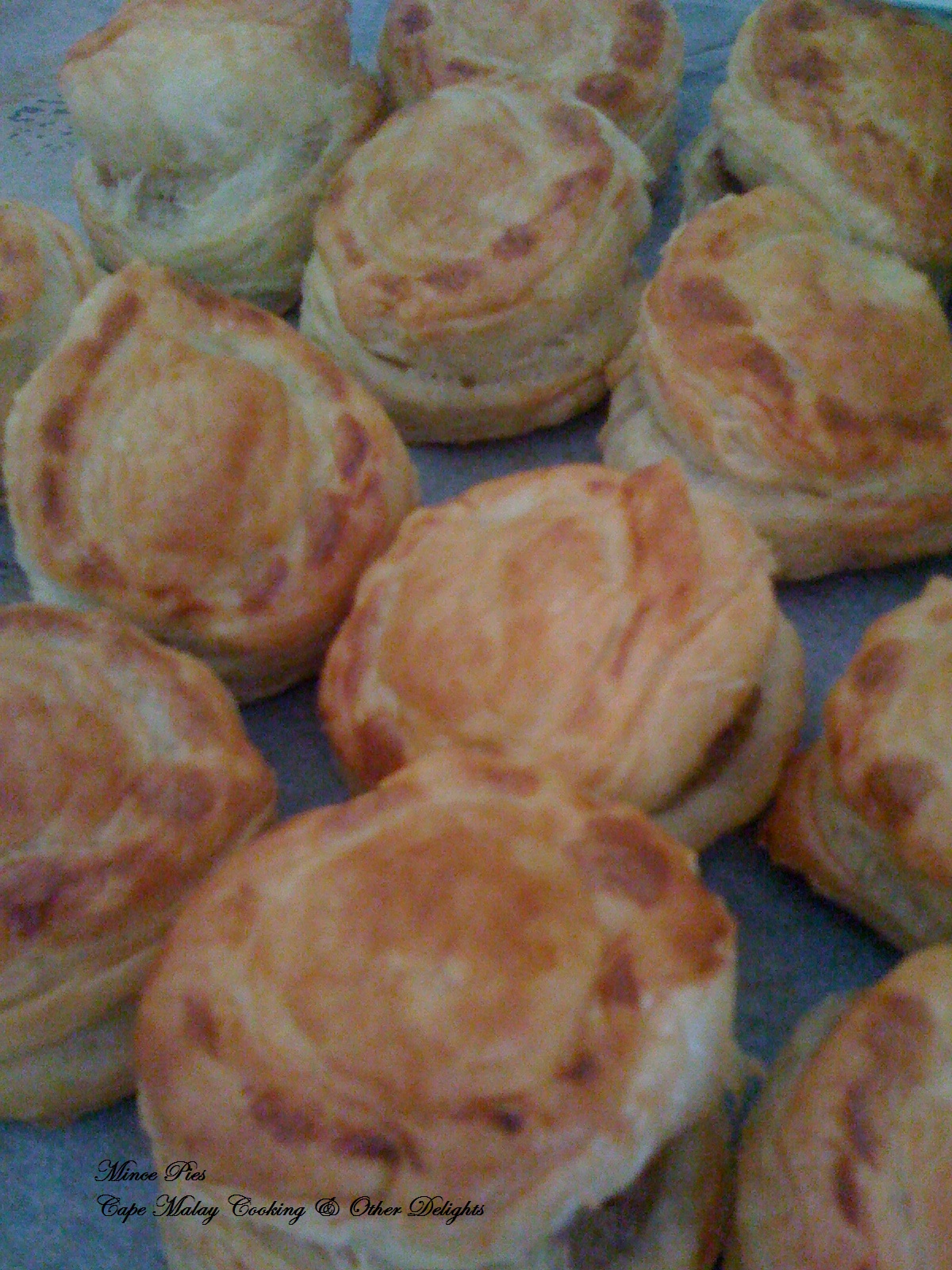
6. Vetbroodtjies Filled With Mince Curry

VETBROODTJIES FILLED WITH MINCE CURRY

CREAM FILLED DOUGHNUTS
3. Pasta Bake

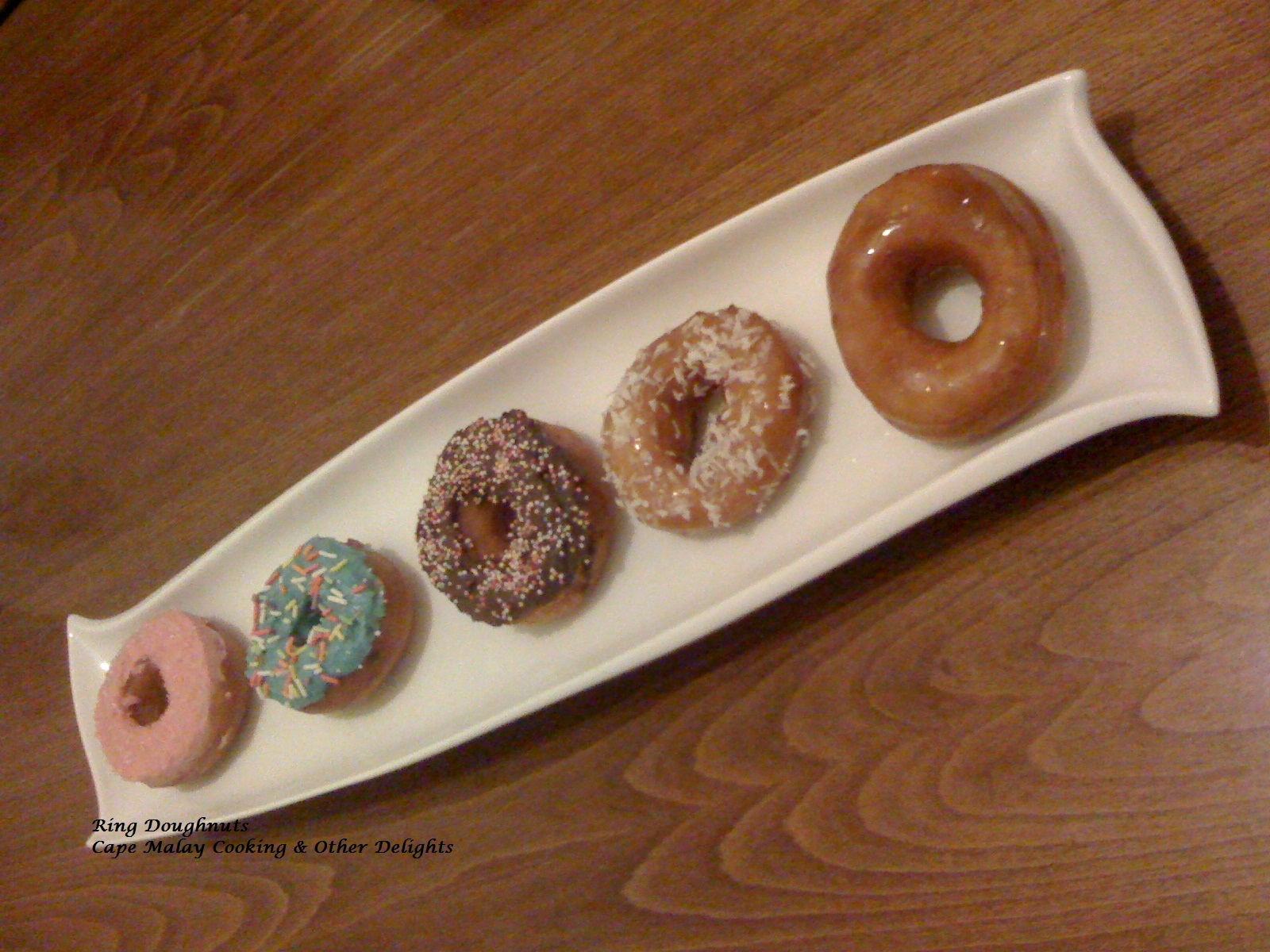
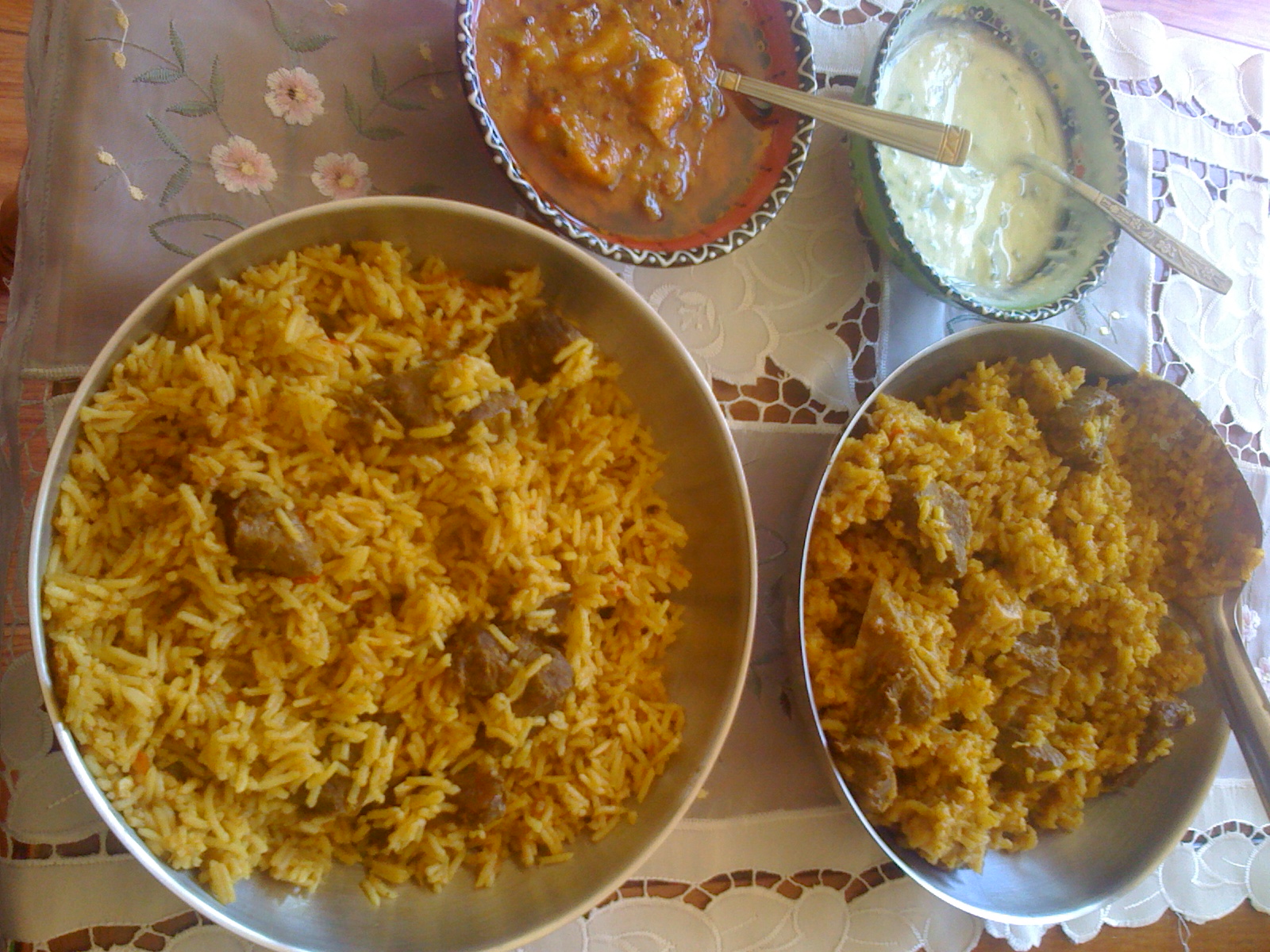
Delicious!!!
I’m looking forward to sharing recipes in 2013…
Salwaa
Cape Malay Cooking & Other Delights
The Cape Malay | South African History Online
The Cape Malay | South African History Online.
The Cape Malay
The ‘Cape Malay’ community is rich in culture and religious traditions that have played a major role in shaping the history and diversity of Cape Town.
Origins
The exploration of the African continent in the fifteenth century and the colonization of South East Asia in the sixteenth century by European powers led to the enslavement of millions of Afro-Asian peoples. European powers exploited ethnic differences by employing the divide and rule tactic and used military conquest to subdue resistance by the local inhabitants. As a consequence Europeans exercised almost total control over virtually of these two continents. One of the reasons linked to colonial expansion in Africa and Asia was trade and the search for new markets. The need for labour to sustain trade created a massive international slave trade which led to the involuntary migration of large numbers of Africans and Asians to different parts of the world. For instance it is estimated that Africa alone supplied some 20 million slaves over three centuries in order to satisfy the American demand for labour.
Although slavery and the slave trade flourished off the coast of West and East Africa, Southern Africa remained largely untouched. This changed after the VOC established their presence at the Cape. Dutch settlers at the Cape of Good Hope arrived in 1652 when Jan van Riebeeck came to the Cape to establish a trading post and supply fort for trading vessels plying the Europe-East Indies route. The Dutch settlers were given land and required to produce enough food to meet the supply needs of the VOC ships and the settlement. Settlers or ‘free burgers’ that were granted land demanded cheap labour in order for them to produce enough supplies. The VOC used this as an opportunity to import political exiles from the East Indies to work as slaves in the Cape Colony.
 The Malays waiting for the boats at Somerset Strand. Source: Franco Frescura Collection.
The VOC which colonised portions of South East Asia and practiced slavery introduced the system to the Cape. Those people that opposed the colonization and occupation of their lands by the Dutch were taken as political prisoners or shipped to exile at the Cape of Good Hope as slaves. The first slaves arrived in the latter half of the seventeenth century with the initial load coming from Africa. Their ship was captured by the Dutch from a Portuguese ship destined for Brazil. However, the majority of slaves were gradually brought to the Cape from the Dutch East Indies in Asia by the Dutch. A large majority of those being brought were Muslims, were captured and sent into exile from colonies such as Madagascar, India, Ceylon and the Dutch East Indies (known as Indonesia today). Other immigrants were from Philippines, Japan, Macau, Malacca, West Indies, Brazil and possibly New Guinea.
The origins of this migration can be traced to early in the sixteenth century when, at the end of Indonesia’s Majapahit Kingdom, European military penetration and anti-Islamic persecution caused resistance which was crushed by the Dutch. This led to many opponents of the Dutch being exiled to the Cape of Good Hope in southern Africa, which was also occupied by them. Some were also brought or captured from English, French and Portuguese ships. Included in this group were the Malay servants of the Dutch officials who were on their way back to the Netherlands from the East. The main group of African immigrant’s came from East Africa, Madagascar and West Africa. Many of these people were skilled artisans, such as silversmiths, milliners, cobblers, singers, masons and tailors. This group came to be known collectively as the ‘Cape Malay,’ despite their diverse origins as far afield as East Africa and Malaysia.
Anyone who opposed the colonization of their countries would be taken as political prisoners or exiles. It was one such group of people that were brought to the Cape of Good Hope. The first of these migrants arrived in the latter half of the seventeenth century, mainly from colonies in Africa and Asia that were occupied by the Dutch and the British.
The large majority being Muslims, were captured and sent into exile from colonies such as Madagascar, India, Ceylon and the Dutch East Indies (Indonesia as we know it today). Some immigrants were from Philippines, Japan, Macau, Malacca, West Indies, Brazil and possibly New Guinea. Some were also brought or captured from English, French and Portuguese ships. Included in this group were the Malay servants of the Dutch officials who were on their way back to the Netherlands from the East.
The main group of African immigrant’s came from East Africa, Madagascar and West Africa.
The origins of this migration can be traced to early in the sixteenth century when, at the end of Indonesia’s Majapahit Kingdom, European military penetration and anti-Islamic persecution caused resistance which was crushed by the Dutch. This led to many opponents of the Dutch being exiled to the Cape of Good Hope in southern Africa, which was also occupied by them.
The first Dutch settlers at the Cape of Good Hope arrived in 1652, when Jan van Riebeeck came to the Cape to establish a trading post and supply fort for trading vessels plying the Europe-East Indies route.
The Dutch required labour and utilised the opportunity to import political exiles from the East Indies as slaves. Many of these people were skilled artisans, such as silversmiths, milliners, cobblers, singers, masons and tailors. This group came to be known collectively as the ‘Cape Malay,’ despite their diverse origins as far afield as East Africa and Malaysia.
Orang Cayen – Men of Repute
Sheikh Yusuf
 A portrait of Sheikh Yusuf
One prominent figure among the exiles, or Orang Cayen (Men of Repute), who resisted the Dutch occupation of the East Indies, was Sheikh Yusuf al-taj alkhalwatial-Maqasari. Credited with having brought Islam to South Africa, Sheikh Yusuf was born in 1626 in Goa on the island of Celebes (today known as Sulawesi). Sheikh Yusuf was the son of Makassarese nobility, and the nephew of King Bissu of Goa.
Sheikh Yusuf spent several years studying Arabic and traditional religious sciences in Mecca. He eventually returned to Banten, West Java, where he taught the Islamic doctrine of “Khalwatiyyah”, which he had learned during his years spent in Mecca.
He eventually joined forces with Sultan Ageng in his fight against the Dutch attempts to gain complete control of the Sultanates in the East Indies. In 1683, Sheikh Yusuf was captured and exiled to Ceylon and eventually brought to the Cape of Good Hope. On 2 April 1694, Sheikh Yusuf, together with 49 other Muslim exiles from the East Indies arrived at the Cape aboard the ship “de Voetboeg.”
Sheikh Yusuf, his family and followers were sent to Zandvliet farm at the mouth of the Eerste River, just outside Cape Town, to prevent his influence on the Islamic slave population. It is ironical that this farm had belonged to a minister of the Dutch Reformed Church, the Rev Petrus Kalden. Under the leadership of Sheikh Yusuf, who was 68 years of age at the time, the group at Zandvliet established one of the first elementary structures of a Muslim community. Dutch attempts to isolate them failed as Zandvliet became a gathering spot for Muslims and a rallying point for runaway slaves, and other exiles from the East. This farm area is now known as Macassar. As Sheikh Yusuf’s influence and spiritual teachings spread widely amongst the slaves at the Cape, they came to represent one of the first areas of resistance to colonisation at the Cape.
Repeated calls from the people and the King of Goa to have Sheikh Yusuf released and sent home were refused by the Dutch. In 1698, the Batavian Council issued a definite refusal to even consider the request and a year later on 23 May 1699, Sheikh Yusuf died. He was buried on a hill overlooking Macassar. A tomb constructed there in his memory is among the 25 Islamic shrines or kramats that encircle Cape Town. Sheikh Yusuf’s remains were brought to Makassar (Ujung Pandang of today) in 1705 and interred in a tomb located in Katangka Village, bordering on the Goa regency. The teachings of Sheihk Yusuf established a sound Muslim community at the Cape. His insightful approach and understanding of the religion still continues today.
Tuan Guru
Another prominent person was Imam Abdulla Kadi Abdus Salaam, or as he is now referred to as ‘Tuan Guru’ (which means Master Teacher) who was born in Tidore in Tinnate Islands of Indonesia in 1712 and became a Prince of this Muslim Sultanate. Tuan Guru was captured in 1780 by the Dutch for allegedly conspiring with the English and was sent as a religious prisoner to Robben Island. He was a keen academic and whilst he was a prisoner, he completed a book on Islamic law titled ‘Ma’rifant al-Islam wa al-Iman’ which explained practices of the Ash’ari creed of Sunnism and stressed the acceptance of the faith of Allah’s will in the world. This creed particularly suited the experiences of exiles and slaves. It also included discussions on scared cures and amulates, thus combining philosophical teaching with the more mystical faith that had developed amongst Cape Town’s underclass. Tuan Guru’s teaching and philosophy provided the basis of Cape Islam until mid-to-late nineteenth century. During this time there was a shift from a hidden and mystical form of Islam to a more open and public practice of the faith.
After his release in 1792, he set up a madrassah at his house in Dorp Street and by 1797; he was given permission to convert a warehouse in Dorp Street into the Auwal Mosque. It is said that Tuan Guru transcribed the Koran from memory as there were no copies at the Cape in his day. Later, when copies were brought to the Cape, it was found that his version contained very few errors. A kramat was erected to his honour on Robben Island.
The Holy circle of Kramats (tombs)
From the tomb of Sheikh Yusuf, a series of kramats stretch in a rough circle around the Peninsula. Besides Sheikh Yusuf’s shrine, these embrace the tombs on Robben Island, Signal Hill, Oude Kraal and Constantia.
The tombs of Signal Hill Cemetary belong to the three Tuans that are buried there: Guru,Syed and Nurman.
The second Tuan was known by the nickname ‘Oupa Skapie’.
The third Tuan may have come from Arabia but very little information is available on him.
It is believed that the kramat at Oude Kraal is that of Nureel Mobein who escaped from Robben Island. (No solid evidence to prove this is available; we can only rely on tradition.)
The question of identity
The terms Malay and Muslim are often used as synonyms but strictly speaking Malay stands for that section of the local Muslim community in which the descendents of Eastern Malays are to be found.
The question of identity has also been raised in South Africa, particularly by the minority communities as they formed part of the marginalised sectors of the community, oppressed masses and neglected groups. During the apartheid period, many rejected the racial policies of the White minority regime and never identified themselves as South Africans.
According to the Population Registration Act of 1950, South Africans were divided into four distinct categories: Whites, Indians, African and Coloureds. The Coloured group was further sub-divided into ‘Cape Malay’, Khoisan, other Coloureds, Bastards, et al. Researchers have pointed out that the Coloured identity has never been seen as an identity in its own right because it has been negatively defined and did not fit the classificatory schemes created by the apartheid politicians. Most of the Western Cape’s Muslims were put into the ‘Cape Malay’ category and thus they inherited the negative connotations that were attached to this category of people. According to Muhammed Haron from the University of Botswana, researchers such as Robert CH Shell use the term ‘Cape Malay’ as many of them came from the east, although the term ‘Indonesian’ would have been fairly accurate. Shell explains that the Cape Muslims came to be known as ‘Cape Malay’ because Malay was the lingua franca of the Indonesian Archipelago and the language was widely spoken at the Cape during and prior to the nineteenth century.
This term remained employable by those who trekked to other parts of the country and neighbouring countries as well. There were occasions, however in the nineteenth and twentieth centuries that the ‘Cape Malays’ were regarded as respectable people who did not drink and were hard working and reliable. This differed from the other ‘Coloured’ groups and the ‘Malays’ seem to have maintained those distinctions mainly because of their religious and cultural traditions. During the traumatic socio-political and economic crises of the 1970’s and 1980’s, the ‘Coloureds’ and their sub-categories appended the term ‘so-called’ to their ethnic identities, this was a clear reflection of them experiencing an identity crisis. It was during these times that the younger generation of the ‘Cape Malay’ group preferred to be called South African Muslims instead of South African ‘Cape Malays’, thus employing the religious label instead of the ethnic one.
Achmat Davis believed that the term ‘Cape Malay’ was unacceptable as it teemed with racist prejudice. This belief was held by Davis at the time when the general Muslim populace sympathised and supported the internal and external liberation movements against apartheid. In the socio-political context of the time, the masses rejected all ethnic labels imposed by the state. However, Davids later accepted the term ‘Cape Malay’ and used it interchangeably with term ‘Cape Muslim’. There seems to be continuous conflict between those who are in favour of the term and those who opposed it.
Today, the ‘Cape Malay’ form the larger section of the local Muslims who can roughly be divided into two groups; the Cape Malay’s whose home language is Afrikaans and the Indians, who speak English and their own vernacular languages. For both groups, Arabic is the language of their religion but for the Cape Malay, it is supplemented by Afrikaans.
The ‘Cape Malay’ community generally speak mostly Afrikaans but also English, or local dialects of the two. Although they no longer speak the Malay languages and other languages which their ancestors used, various Malay words and phrases can still be heard in Cape Town today.
Areas of Settlement
When the ‘Malay’ exiles and slaves arrived at the Cape, they settled at Gallows Hill which was later known as De Waterkant (today this form part of Green Point). The Gallowsteen or execution gallows was constructed here and slaves who protested against the cruelty of the Dutch were executed here. With the introduction of the Group Areas Act in 1950, all the families at Waterkant were forcibly moved to the outer areas of Cape Town.
Bo-Kaap
 Flowers seller, Adderley Street, Cape Town. Franco Frescura Collection.
Other Muslims slaves were scattered across the town before emancipation, although a number of Muslim free Blacks were beginning to concentrate in the area on the slopes of Lion’s Rump later known as the Bo-Kaap. Other slaves settled in the Devils Peak area which already had an established community.
By 1840, Cape Town established its first municipality and the cluster of houses from Hanover Street to Lowry Street then became known as District 12. By 1849, the population rose considerably and the area expanded rapidly due to the emancipation of a number of slaves. Many ‘Malays’ settled here, a number of whom lived in the area above the open field in the vicinity of Muir Street.
This area was originally known as Kanaladorp. This name was a mixture of Maleyu and Dutch and mostly likely referred to people assisting each other, a community spirit: the literal meaning being ‘if you please’. Early Kanaladorp was not only ethnically mixed but socially as well. In 1867, Cape Town was divided in six districts and Kanaladorp became the sixth district, henceforth people referred to the area as District Six.
District Six
District Six had a large concentration of ‘Malay’ people. This area was mainly a working class area. Living conditions varied enormously as you could find one family in a detached house while other house could contain up to 16 people in a single room.
Toilets were usually in the backyards and baths had to be taken in the kitchen in huge tubs. However, due to overcrowding, the area quickly turned into a slum area. In spite of this, there existed a joyous spirit and common bond amongst the inhabitants who had been living there for years. Sadly, in 1966, under the Group Areas Act, District Six was declared a ‘White’ area as government regarded the region as a health hazard to the city. As a result many ‘Malay’ people were moved along with others to the Cape Flats area.
Culture and traditions
The ‘Cape Malays’ have preserved their cultural identity and Islamic creed.
Language
The Afrikaans language evolved as a language of its own through a simplification of Dutch in order for the slaves to be able to communicate with the Dutch and amongst each other. Educated Muslims were the first to write texts in Afrikaans.
The ‘Cape Malay’ community generally speak mostly Afrikaans. English is used to a lesser extent, or local dialects of the two can also be heard. Although they no longer speak the Malay languages and other languages which their ancestors used, various Malay words and phrases can still be heard in Cape Town today for example: ‘terima kasin’ which is the Malay equivalent for ‘thank you’, and ‘salmaat djalen’ which is ‘good journey to you’.
Home life
The ‘Cape Malay’ people follow Islamic principles of living. On Thursday nights, Malay people burn incense sticks (niang) in preparation for Friday.
Fasts and feasts
A feast to which relatives are invited to is known as a ‘merang’ and it is usually held to celebrate a special occasion. The following fasts and feasts are observed by all Malay people.
Moulood’n-Nabi (Birthday of the Prophet- PBUH)
This day is celebrated on the 12th day of Rabi-ul-Auwal. The prayers for this day are certain recitations from the Quran and songs that are sung in harmony. Women practice at least three months in advance for this ceremony. The Malay community celebrate by going to the mosque on the Saturday afternoon where they cut up orange leaves which are then dipped into sweet smelling oils and tied up in sachets. This is known as ‘rampies sny’. At the evening prayer, at the mosque, sweetmeats are served and the little sachets of scented orange leaves are given out as gifts. This tradition which is believed to be of Indonesian origin gave the slaves a link to their ancestral home. The purpose of this ceremony is to send praises (salawat) to the Prophet (PBUH).
Mir’raj
This is a celebration in memory of the Prophet’s (PBUH) journey in one night from Mecca to Majid Al-Aqsa (known as Jerusalem) and then to the 7th Heavens and back.
Roa
Roa is on the 15th of the Islamic month of Shabaan and is a feast of purification.
Ramadaan
The most important fast in the Muslim calendar is the month in which the revelation of the Koran began. All Muslims must observe it, except those who are ill, travellers, the old, women who are pregnant, and children under the age of puberty. The Muslim year is determined by the sighting of the moon and the fast commences by the new moon in the beginning of the ninth Islamic month. The Islamic months consists of 29 or 30 days, depending on the sighting of the moon and the Islamic New Year starts on the month of Muharram and ends with the month Thul-Haj. The ‘Malay’ community refer to this fast as ‘poewasa’.
The most important day in the fast is the 27th night which is described in the Koran as the ‘night of power’. It is said in the Koran that during this holy night the sins of the faithful are forgiven and the angels and souls of Heaven come down to earth to perform many miracles.
The Malay people clean their houses in preparation for this night and candles are lit (kers-opsteek).
Lebaran Ramadaan (Eid-al-Fitr)
The sighting of the new moon again brings the holy month of Ramadaan to an end. This day is celebrated by all Muslims around the world. The day begins early as the men go to the mosque for a special Eid prayer or ‘Eid salaah’. Thereafter in their new clothes, families visit and greet each other. Gifts are exchanged and elaborate food is prepared for the day.
Lebaran Hadji (Eid-ul- Adha)
This feast is known throughout the Muslim world as Eid-al-Adha. It is held after the hajj pilgrimage. A sheep is sacrificed by families who can afford to do so and shared with the poor.
Malay Food
Popular amongst Malay people are dishes such as bredie, frikkadels, denningvleis, sabananvleis, pinangkerrie, sosastie and bobotie and although the ‘Malay ‘people have changed their diet, these dishes still seem popular at the Cape.
Stews, roasts and baked vegetables still form part of the Malay diet but the food is very peppery and spicy.
Contact with the Dutch colonists left it’s mark as many old Cape dishes such as ‘melktert’ and ‘koeksisters’ are still to be found in Malay homes.
Weddings
 The Malay wedding. Franco Frescura Collection.
When a Malay man decides to get married, he asks his father to approach his prospective father in law and should they agree to the man’s hand in marriage then the couple become engaged or ‘lambaar’. A time is fixed for the wedding and money ‘maskowi’ is paid to the bride to be. This money, which varies in amount, is according to the groom’s means and is paid to the priest who hands It over to the bride.
On the wedding day, the bride wears a ‘medora’ or headdress which is reminiscent of the golden ballets of Bali, and receives her guests in her first wedding dress. She does not attend the wedding ceremony which takes place at the mosque but is represented by her father or another male member of her family. A feast takes place usually for lunch at the bride family. Thereafter she changes her dress and joins the groom’s family for supper. At the end of the evening the bride is taken to her new home by her in laws or ‘khujadi’s’.
 Straw hat-toedang.
Early Malay dress
Early Malays wore a distinctive Mulsim style of dress: a toedang conical ‘kopdoek’ and the ‘kaparring’ wooden sandals, these originated in South-East Asia. Imams and others of higher status wore turbans.
The Khalifa
 kaparang – wooden sandals.
The Khalifa is a ‘Malay’ sword dance which takes place on the 11th day of Rabi-al-Agier in honour of Abdul Kadir Beker, a follower of the Prophet (PBHU). Its original religious implications have been modified with the result that the Khalifah now amounts to a skilful exhibition of sword play. Some Imams condone it as symbolic of the power of flesh over steel through faith, while others disapprove. The players, invariably state that they are aided by prayer.
Although the Khalifah or chalifah is the name of the central person conducting the ceremony, in South Africa it is often used for the ceremony itself. The Malay people used the word ‘ratiep’ for the actual performance. It is said that if one attends a Khalifa performance, one becomes conscious of the hypnotic effect which the rebanas have in conjunction with the rhythmic chanting, the incense and the general performance. For the rest skilful sword play explains unusual dance.
New Year’s Carnival
Each year on the 2nd of January or ‘Tweede Nuwe Jaar’ the Bo Kaap celebrates a big street party, known as the ‘Coon Carnival’ in the centre of town. Originally, this was introduced by the Muslim slaves who celebrated their only day off work in the whole year. Nowadays men, woman and children march from the Grand Parade to the Green Point stadium. Plans for the parade are started a year in advance for the troupes that take part. Elaborate costumes are designed and sewn by ‘Malay’ tailors and are kept a secret until the day of the carnival as troupes are judged by their costumes, singing and dancing. Clad in colourful, shiny suits, hats and sun umbrellas, in true Rio Carnival style, the spirit and vitality of the Cape Minstrels continue to fascinate both tourists and locals alike. The ‘Coon Carnival’ has become one of the biggest events on the Cape Town calendar.
Music
This cultural group developed a characteristic type of Cape Malay music. One particular interesting secular folk song type, of Dutch origin, is termed the nederlandslied. The language and musical style of this genre reflects the history of South African slavery. Often, it is described and perceived as ‘sad’ and ’emotional’ in content and context. The nederlandslied shows the influence of the Arabesque (ornamented) style of singing which is unique in South Africa, Africa and probably in the world.
Conclusion
Remnants of the old ‘Malay’ culture is still to be found in Cape Town today as a thriving Cape Malay community lends character to the mother city of South Africa. Cape Malay architecture, food (such as bobotie and yellow rice, samoosas, rotis, etc.), tailor shops, mosques and the warmth and hospitality of the Malay people continue to attract tourists in abundance to the mother city. Malaysians and Indonesians are starting to visit Cape Town in increasing numbers to experience this cultural link for themselves.
References
- Cassiem, S.N. (2004) Muhammed The Pathway to the Garden. Hijrah Productions. South Africa. (p1-3).
- Davis,A & Da Costa,Y (date unknown) Pages from Cape Muslim History. Shooter and Shuter. South Africa.
- Du Plessis, I.D. (1972) The Cape Malay. A.A Balkema. Cape Tow. (p6-31)
- Misbach-Habib,S. & Hutchinson, M. (2008) Voices of the Bo-Kaap. Shuter. South Africa. (p14-16;31-34).
- Schoeman,C. (1994) District Six The Spirit of Kanala. Human and Rousseau. Cape Town.
- Worden, N., Van Heyningen, E., & Bickford-Smith,V. (date unkown) Cape Town The making of a City. David Philip Publishers. Cape Town.(p124-127).
- The Bo-Kaap or Cape Malay Quarter [online]. Available at: http://www.southafrica-travel.net [Accessed 11 October 2010].
- Haron, M. (2000) The Cape Malay: an imagined community. Conflict of Identities.
- The Case of South Africa’s Cape Malays [online]Available at: http://www.phuakl.tripod.com [Accessed 12 September 2010]
- The Cape Malay. From Wikipedia. Available at: enwikipedia.org [Accessed 14 October 2010}.
- Malayamerican (2004) A Cultural Link Spanning Three Centuries, The Story of the Cape Malay [online], 18 January. Available at: http://www.saembassy-jakarta.or.id [Accessed 5 September 2010] (blog)
- Cape Malays and their Heritage [online]. Available at: http://www.toyerfarrath.wordpress.com [Accessed 5 September 2010] (blog)
CONVERSIONS & EQUIVALENTS
I love the fact that the site is a global community, but of course it does raise issues and problems and another thorny area is weights and measures. Obviously, when you move from one system of measurement to another, you are obliged to round up or down, so it’s always going to be an approximation, but here is a table of conversions and equivalents, which should at least help!
Equivalents
As we welcome such an international audience to this site you may not recognise some of the ingredients listed in the recipes section. Here is our UK / US equivalents guide to give you a helping hand…
| Double cream | Heavy cream |
| Single cream | Light cream |
| Cornflour | Corn starch |
| Shortcrust | Pie crust |
| Caster sugar | Superfine sugar |
| Icing sugar | Confectioners’ sugar |
| Grill | Broil |
| Aubergine | Eggplant |
| Courgette | Zucchini |
| Mangetout | Snow peas |
| Coriander | Cilantro |
| Clingfilm | Saran wrap |
| Beef mince | Ground beef |
| Prawns | Shrimp |
| Digestive biscuits | Graham crackers (substitute) |
| Sultanas | Raisins |
| Trifle sponges | Ladyfingers |
| Spring onions | Scallions |
| Semi-skimmed milk | 2% milk |
| Dark/plain chocolate (at least 70% cocoa solids) | Bittersweet chocolate |
| Milk/plain chocolate (less than 70% cocoa solids) | Semi-sweet chocolate |
| Bicarbonate of soda | Baking soda |
| Horlicks | UK brand of malted milk powder |
| Maltesers | UK brand of malted milk balls |
TEMPERATURES
| Gas Mark 1 | 140C | 275F | Very cool |
| Gas Mark 2 | 150C | 300F | Cool |
| Gas Mark 3 | 160C | 325F | Warm |
| Gas Mark 4 | 180C | 350F | Moderate |
| Gas Mark 5 | 190C | 375F | Fairly Hot |
| Gas Mark 6 | 200C | 400F | Fairly Hot |
| Gas Mark 7 | 210C | 425F | Hot |
| Gas Mark 8 | 220C | 450F | Very Hot |
| Gas Mark 9 | 240C | 475F | Very Hot |
VOLUME AND LIQUID MEASUREMENTS
| 5 ml | one-sixth fl oz | 1 teaspoon |
| 15ml | half fl oz | 1 tablespoon (NOTE: Australian tablespoon = 20ml) |
| 30ml | 1 fl oz | 2 tablespoons |
| 45ml | 1 and half fl oz | 3 tablespoons |
| 60ml | 2 fl oz | quarter cup |
| 75ml | 2 and half fl oz | one-third cup |
| 125ml | 4 fl oz | half cup |
| 150ml | 5 fl oz | two-thirds cup |
| 175ml | 6 fl oz | three-quarters cup |
| 250ml | 8 fl oz | 1 cup |
| 600ml | 1 pint | 2 and half cups |
| 900ml | 1 and half pints | 3 and three-quarter cups |
| 1 litre | 1 and three-quarter pints | 4 cups |
SOME USEFUL CUP CONVERSIONS
Please note that these are approximations
| 1 cup sugar | 200g |
| 1 cup icing sugar | 125g |
| 1 cup flour | 140g |
| 1 cup rice | 200g |
| 1 cup frozen peas | 125g |
| 1 cup fresh breadcrumbs | 70g |
| 1 cup grated cheese | 100g |
| 1 cup chocolate chips | 175g |
| 1 cup sultanas | 150g |
| 1 cup honey/syrup | 300g |
| 1 stick of butter | 110g 4oz |
WEIGHT CONVERSIONS
| 15g | half oz |
| 30g | 1 oz |
| 45g | 1 and half oz |
| 60g | 2 oz |
| 75g | 2 and half oz |
| 90g | 3 oz |
| 100g | 3 and half oz |
| 125g | 4 oz |
| 150g | 5 oz |
| 175g | 6 oz |
| 200g | 7 oz |
| 250g | 8 oz |
| 275g | 9 oz |
| 300g | 10 oz |
| 325g | 11 oz |
| 350g | 12 oz |
| 375g | 13 oz |
| 400g | 14 oz |
| 450g | 15 oz |
| 500g | 1 lb |
CAKE TINS SIZES
| 20cm | 8 inch |
| 23cm | 9 inch |
| 25cm | 10 inch |
LOAF TIN SIZES
| 450g | 1lb |
| 900g | 2lb |
 Cape Malay Cooking & Other Delights - Salwaa Smith
You must be logged in to post a comment.